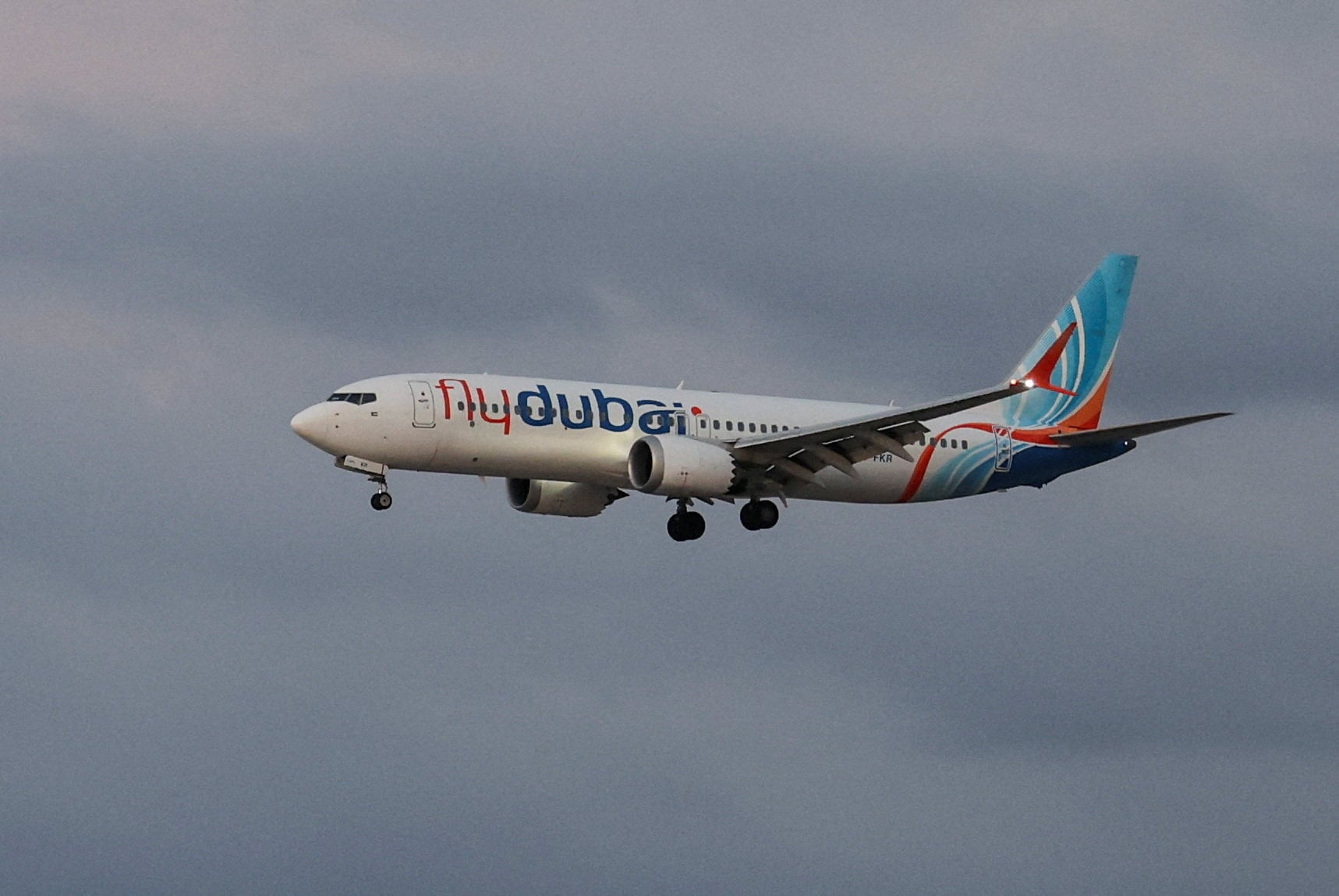
03-10-2026
Captain Smit Machchhar, an Indian flydubai pilot who was stabbed during a flight from Dubai to Tel Aviv, is recovering in hospital after being transferred to Abu Dhabi for further treatment. His close friend Dhaval Patel, who trained with him in New Zealand nearly two decades ago, told the ABC that he was shocked by footage of the attack. Patel remembered Machchhar as a knowledgeable and generous colleague who helped fellow pilots understand aviation, and recalled that Machchhar presented him with his captain’s fourth stripe. Seeing someone he loved in distress, Patel said, was “shattering” and “breaks you.”
Machchhar was allegedly attacked by his co-pilot, who Israel’s prime minister said apparently tried to crash the plane. Preliminary investigations cited in a Saudi Arabian embassy statement indicated that the first officer assaulted the captain and both sustained injuries. India’s embassy in the United Arab Emirates said Machchhar was recovering well; his family travelled from India to be with him.
In a video call with Indian Prime Minister Narendra Modi, Machchhar described fighting for his life while trying to protect passengers. He said that, despite being stabbed, he sensed the aircraft was going down, pushed himself toward the door, and opened it so others could enter. He credited others with playing a role and said he received the best medical attention in Saudi Arabia. Modi praised his actions, saying people in India and around the world wanted to meet him.
Patel said he felt relief at seeing Machchhar steadily recover and respond to treatment. He was also proud that his friend had been honoured by Modi and other world leaders, describing the recognition as a source of pride for their entire group of colleagues. The article presents the episode through the perspectives of Machchhar’s friend and the pilot himself, balancing the shock of the alleged attack with relief at his recovery and admiration for his efforts to save passengers.
Entities: Smit Machchhar, Dhaval Patel, Narendra Modi, flydubai, India • Tone: emotional • Sentiment: positive • Intent: inform
03-10-2026
Flydubai captain Smit Machchhar described how he survived a stabbing by his co-pilot during a flight to Tel Aviv and helped prevent the aircraft from crashing. Speaking from a hospital in Abu Dhabi during a video call with Indian Prime Minister Narendra Modi, Machchhar said he was badly injured and collapsed on the cockpit floor, but realized the plane was descending and that the cockpit door was within reach. Despite continuing to be attacked, he opened the door, allowing passengers and crew to enter and overpower the co-pilot. A second pair of Flydubai pilots then took control and landed the aircraft in Tabuk, Saudi Arabia.
The aircraft, which carried 174 people, briefly lost about 17,000 feet before it was brought under control. Machchhar said his 17 years of aviation experience, including 11 years as a captain, helped him understand what was happening. He also recounted saying a Hindu devotional prayer and said he believed God had saved him.
Modi praised Machchhar’s presence of mind and bravery, saying his actions saved lives and upheld the reputation of Indian pilots. The incident has prompted sharply worded interpretations from officials: UAE presidential adviser Anwar Gargash called it a “terrorist act,” while Israeli Prime Minister Benjamin Netanyahu said the co-pilot had undergone “Islamist radical indoctrination” and appeared “suicidal.” US President Donald Trump warned that Iran would be “hit very hard” if it were found to have links to the attack. The United Arab Emirates said it would investigate the incident.
Entities: Smit Machchhar, Narendra Modi, Anwar Gargash, Benjamin Netanyahu, Donald Trump • Tone: neutral • Sentiment: neutral • Intent: inform
03-10-2026
FlyDubai captain Smit Machchhar told Indian Prime Minister Narendra Modi that he opened the cockpit door despite being stabbed by his co-pilot, allowing passengers and crew to enter and subdue the attacker during a flight bound for Israel. Speaking from a hospital bed in Saudi Arabia, Machchhar said he believed the aircraft was going down and that he had to get up to prevent disaster. He credited Hindu religious chants and his faith with helping him find the courage to act. He said he was confident he would recover and return to flying, and Modi offered him the support and best wishes of the Indian nation.
The article reports that the unidentified co-pilot was transferred from Saudi Arabia to the United Arab Emirates for questioning by Israeli, UAE and Saudi officials. An Omani official told CBS News that the co-pilot was born in Oman and holds Omani citizenship, though Oman’s government had not publicly confirmed this. Israeli Prime Minister Benjamin Netanyahu alleged that the co-pilot had undergone Islamist radicalization and said investigators were examining whether he had been sent by someone. Netanyahu also described the co-pilot as suicidal, citing his reported shouts after being subdued.
President Donald Trump suggested the co-pilot might have links to Iran or its Islamic Revolutionary Guard Corps, while acknowledging the matter was still under investigation. The article presents these claims as statements by officials, not as established findings. Overall, it recounts Machchhar’s account of the emergency and the ongoing, multinational investigation into the attempted attack.
Entities: Smit Machchhar, Narendra Modi, Benjamin Netanyahu, Donald Trump, FlyDubai Flight 1073 • Tone: neutral • Sentiment: neutral • Intent: inform
03-10-2026
The article examines the alleged attempt by a FlyDubai co-pilot to stab the captain and crash a passenger flight traveling from Dubai to Tel Aviv. According to Israeli Prime Minister Benjamin Netanyahu, the captain fought off the co-pilot long enough to unlock the cockpit, after which passengers subdued him. Two off-duty pilots aboard took control and made an emergency landing in Tabuk, Saudi Arabia. There were 174 people on board; no passengers were seriously injured, though the captain was stabbed and two crew members were hospitalized with unspecified injuries. The co-pilot was arrested and remained in custody as authorities investigated.
The co-pilot had not been officially identified in public, but sources familiar with the investigation identified him to CBS News as Hamam al Hamami. They said he had trained as a pilot at Oman Air, where government surveillance reportedly found he was visiting radical websites. Oman Air moved him to an office role, and he later resigned. Sources also described a video he allegedly posted showing Israeli airline planes in Dubai and, at its end, an image of al Qaeda leader Ayman al-Zawahiri. They said FlyDubai hired him after he moved to Dubai without checking with the Omani government. His nationality and possible dual citizenship were not publicly confirmed by Oman.
Investigators had not established a motive. Netanyahu and Israeli Defense Minister Israel Katz characterized the incident as Islamist radicalization or a jihadist attack, while Netanyahu said it was too early to determine whether Iran was involved. President Trump suggested a possible Iran connection, but an Israeli security official said investigators were examining several possibilities, including whether the co-pilot acted alone or whether the incident was an attempted terror attack. The co-pilot was transferred from Saudi Arabia to the UAE for questioning by Israeli, Emirati, and Saudi officials. The article notes that a correction clarified he resigned from Oman Air rather than being fired.
Entities: Hamam al Hamami, Benjamin Netanyahu, Israel Katz, Donald Trump, Ayman al-Zawahiri • Tone: neutral • Sentiment: negative • Intent: inform
03-10-2026
The article reports that the co-pilot who stabbed the captain aboard Flydubai Flight 1073 had reportedly been barred from flying in Oman because of concerns about his ideological views. The Wall Street Journal first reported the ban, while CNN and Al Arabiya cited sources who said the co-pilot had been removed from a position at Oman’s national airline over concerns about extremist views. The article notes that it was not clear what form the reported radicalization took, or whether Oman had shared its concerns with other countries or airlines.
The attack occurred on a flight from Dubai to Tel Aviv with 182 people aboard, including four pilots. After the co-pilot stabbed the captain in what appeared to be an attempt to crash the aircraft, two other pilots took control and landed it safely in Tabuk, Saudi Arabia. Flydubai reportedly hired the co-pilot despite Oman’s ban, and the flight was operating a sensitive route between the UAE and Israel, which established normalized relations through the 2020 Abraham Accords.
Israeli Prime Minister Benjamin Netanyahu said the co-pilot had undergone “Islamist radical indoctrination” and intended to crash the plane. Netanyahu also said authorities were investigating whether anyone had directed the co-pilot, and warned that those involved would face a “heavy price.” The investigation remains ongoing. The incident has prompted questions about how the attack unfolded and how aviation employers conduct background checks.
Entities: Flydubai, Flydubai Flight 1073, Oman, Dubai, Tel Aviv • Tone: neutral • Sentiment: negative • Intent: inform
03-10-2026
The article identifies Hamam al-Hammami, an Omani co-pilot accused of stabbing the captain of a Dubai-to-Tel Aviv flydubai flight and attempting to take control of the aircraft. According to sources cited by The Wall Street Journal and CNN, al-Hammami had previously worked for Oman Air but was removed from a flying role after radical ideology was reportedly found on his phone and concerns arose about his views. Despite that history, he later joined flydubai. The article says it is unclear whether Oman shared its concerns with other countries or airlines.
Flight 1073 was carrying 182 people on Wednesday when the alleged attack sent the aircraft into an 18,000-foot plunge. Captain Smit Machchhar resisted, while passengers and off-duty pilots helped regain control. Israeli Prime Minister Benjamin Netanyahu said the attacker had undergone Islamist radicalization and intended to crash the aircraft with everyone aboard. He also said investigators were examining whether someone had sent the attacker.
The incident has prompted questions about aviation security. Analysts cited in the article described it as a significant security failure and said the co-pilot should have been detected before reaching the airport. The report notes that flydubai pilots undergo security screening and annual medical checks, while the company’s psychology checks for promotion to captain may not have applied to al-Hammami. It also describes security concerns around flights between the UAE and Israel. Following the attack, flydubai suspended Dubai–Tel Aviv flights until further notice.
Entities: Hamam al-Hammami, Smit Machchhar, Benjamin Netanyahu, flydubai, Oman Air • Tone: urgent • Sentiment: negative • Intent: inform
03-10-2026
The article reports that the co-pilot accused of attacking the captain of a flydubai flight from Dubai to Tel Aviv had previously been barred from flying in Oman because of concerns about extremist views. The suspect is identified in media reports as Hamam al-Hammami, an Omani national. The reports emerged as investigators and officials examined his background and motives following an incident aboard the flight on Sept 30, which officials said narrowly avoided catastrophe.
According to the article, the Indian captain was assaulted by the co-pilot during the flight. The captain managed to open the cockpit door, after which passengers and crew overpowered the suspect. The aircraft made an emergency landing in Saudi Arabia. Israeli Prime Minister Benjamin Netanyahu said the suspect had undergone “Islamist radical indoctrination” and had tried to crash the plane.
Several media organizations reported on concerns previously raised about the suspect. The Wall Street Journal, citing people familiar with the matter, said Omani authorities had banned him from flying over concerns about his ideological views. CNN reported, citing two sources, that he had been removed from a job at Oman’s national airline the previous year. Al Arabiya said an informed source described him as holding extremist views and reported he had spent time in Syria, potentially exposing him to radical groups. ABC News, citing senior intelligence and law enforcement officials familiar with the investigation, reported that extremist materials had allegedly been found in his possession while he was a trainee. The article attributes these details to media reports and sources; it does not present them as independently established findings.
Entities: Hamam al-Hammami, Benjamin Netanyahu, flydubai, Oman, Dubai • Tone: analytical • Sentiment: neutral • Intent: inform
03-10-2026
The article examines how Hamam al-Hammami, an Omani national accused of stabbing flydubai Captain Smit Machchhar and trying to crash a Dubai–Tel Aviv flight, came to serve as its co-pilot despite earlier concerns about his alleged extremist views. It says investigators are looking into both the attack and the security checks that allowed him onto the crew of a flight bound for Israel, a country with which Oman has no diplomatic relations.
Reports cited by the article say al-Hammami trained and worked as a pilot for Oman Air. Omani government surveillance allegedly found that he visited radical websites during his training, after which the airline moved him from flying duties to an administrative job. He reportedly left Oman Air around 2024, later worked at Royal Air Maroc, and eventually joined flydubai. Sources told CBS News that flydubai hired him without checking with the Omani government; it remains unknown what checks the airline or relevant authorities actually conducted.
Investigators are also reviewing social-media material attributed to al-Hammami, including posts referencing al-Qaeda figures and a poem about resisting humiliation and death. The article notes that it is unclear who posted some material and whether it was scheduled, since it appeared after the incident. Reports disagree about whether he held a second nationality: early sources suggested dual citizenship might explain his clearance, while a later Jerusalem Post report said he had none.
Israeli Prime Minister Benjamin Netanyahu has said investigators believe al-Hammami was radicalised and intended to crash the aircraft, while also examining whether anyone directed him. US President Donald Trump suggested a possible Iran link, but Netanyahu said it was too early to determine Iran’s involvement. The UAE and Israel are conducting investigations into possible terrorism, advance planning, outside direction, and aviation-security procedures.
Entities: Hamam al-Hammami, Smit Machchhar, Benjamin Netanyahu, Donald Trump, flydubai • Tone: analytical • Sentiment: negative • Intent: analyze
03-10-2026
The article reports that the co-pilot of a Flydubai flight bound for Tel Aviv had previously been barred from flying in Oman because of concerns that he had adopted extremist views. A person familiar with the matter told the Associated Press that the co-pilot was later hired by the UAE-based airline. The source spoke anonymously because the investigation is ongoing, and the article says it was not clear how extensively the co-pilot was vetted during the hiring process. Oman’s decision to bar him had previously been reported by the Wall Street Journal.
Officials said the co-pilot nearly crashed the flight, which had 182 people aboard. The article does not provide further details about the alleged incident, the co-pilot’s identity, or the evidence behind the concerns about his views. A regional investigation is underway.
The report also places the episode in a wider context of disruption to Middle Eastern travel. It says the UAE has cancelled all flights to Israel, complicating travel for hundreds of passengers who typically fly between the countries each day. The incident has added to a crisis in the region’s travel industry and raised questions about aviation security. It has also further unsettled a Middle East already shaken by the US-Iran war. Overall, the article focuses on the co-pilot’s reported history and the unresolved questions surrounding airline vetting, while noting broader regional consequences. It attributes key claims to an anonymous source or officials and does not present the investigation’s conclusions.
Entities: Flydubai, Oman, United Arab Emirates (UAE), Tel Aviv, Wall Street Journal • Tone: analytical • Sentiment: negative • Intent: inform