31-05-2026
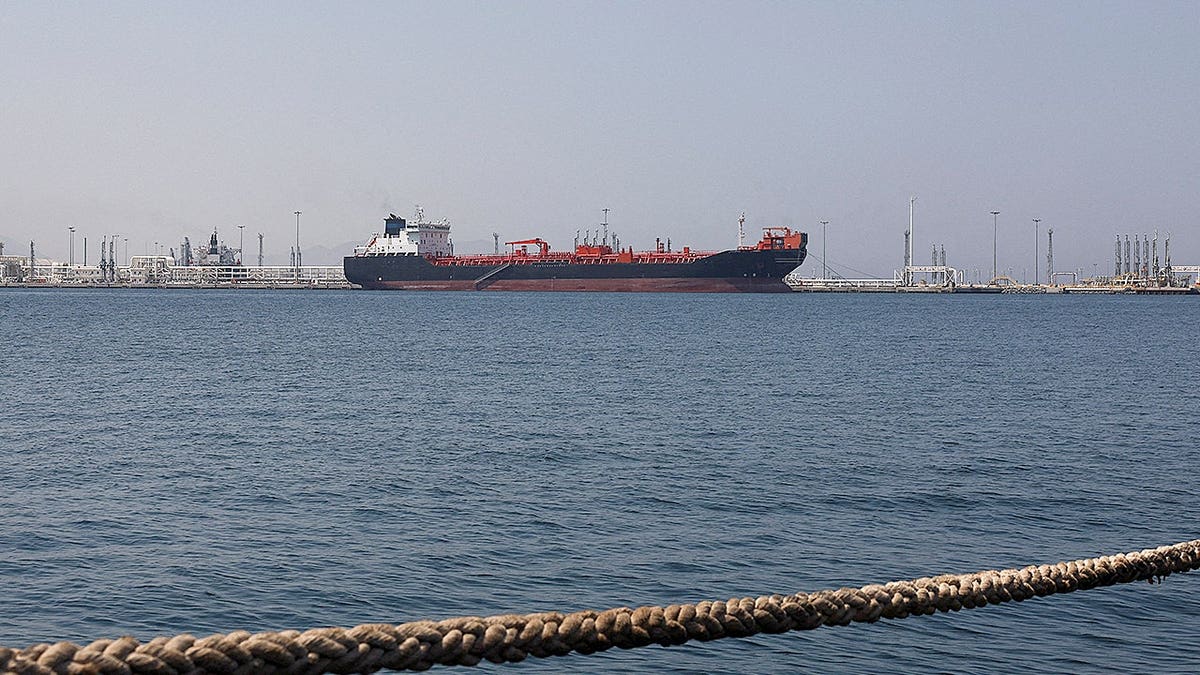
In an exclusive interview at the United Nations, Czech Foreign Minister Petr Macinka said the Czech Republic is ready to help secure freedom of navigation in the Strait of Hormuz and is already discussing ways to contribute specialized surveillance capabilities despite lacking a navy. Macinka framed Iran as a major global threat, citing its nuclear program, drones and ballistic missiles, terrorism, and its leverage over the Strait of Hormuz as "war tools" that must be countered. His remarks align the Czech Republic closely with the Trump administration’s push for stronger allied participation in protecting shipping lanes and pressuring Iran.
The article places Macinka’s comments in the broader context of rising tension over Iran, U.S. demands that European allies do more for collective defense, and President Donald Trump’s criticism of NATO allies for failing to support U.S. military efforts. Macinka backed Trump’s call for greater NATO defense spending, argued that Europe has delayed military investment for too long, and criticized the EU’s Green Deal as financially harmful to defense readiness. He also expressed strong support for Israel and the United States, presenting the Czech Republic as a dependable partner on security issues. The piece ends by suggesting Macinka’s stance reflects a broader political realignment toward Trump-style “common sense” politics, though the excerpt cuts off mid-thought.
Entities: Petr Macinka, Czech Republic, Prague, Strait of Hormuz, Iran • Tone: analytical • Sentiment: neutral • Intent: inform
31-05-2026
Israeli and Lebanese military delegations opened rare Pentagon-mediated talks in Washington aimed at reducing tensions along the Israel-Lebanon border and supporting a fragile ceasefire extended in mid-April. The discussions mark a notable shift from broad diplomatic bargaining to direct military coordination, with the U.S. trying to create a security track that could prevent renewed escalation, enforce the ceasefire, stabilize the border, and clarify the Lebanese Armed Forces’ role in limiting Hezbollah. Fox News cites analysts who say the talks’ biggest obstacle is Hezbollah itself: the Iran-backed group remains deeply embedded in Lebanese politics and society, retains drones and rockets, and has not been meaningfully disarmed despite prior ceasefire commitments placing that responsibility on the Lebanese state.
The article emphasizes that the Lebanese government faces a difficult balancing act. On one hand, it is under pressure from the United States and Israel to curb Hezbollah’s military power; on the other hand, officials fear internal instability or even civil conflict if they move too aggressively against the group, which retains support among Lebanon’s Shiite population. The report also notes that Israeli operations continue in parts of southern Lebanon even as the ceasefire holds, and that Prime Minister Benjamin Netanyahu has signaled Israel will keep military pressure on Hezbollah during the negotiations. Analysts quoted in the piece frame the talks as part of a broader Trump administration effort to weaken Iranian influence in the region by advancing a peace agreement between Israel and Lebanon.
Entities: Israel, Lebanon, Washington, Pentagon, U.S. State Department • Tone: analytical • Sentiment: neutral • Intent: inform
31-05-2026
According to three officials, President Trump has tightened the terms of a proposed framework aimed at ending the war in Iran and sent the revised proposal back for Iran’s consideration. The article says the White House is trying to pressure Tehran into accepting a memorandum of understanding that would effectively end the U.S.-Israeli military campaign against Iran in exchange for Iran lifting its blockade of the Strait of Hormuz, a vital route for global oil and gas shipping. Trump is said to have objected to provisions that would unfreeze Iranian funds, echoing his long-standing criticism of Barack Obama’s nuclear deal with Iran and the release of frozen assets under that agreement. Officials said the changes may be intended both to harden the U.S. position and to speed up Iran’s response after repeated delays and difficulty reaching Iran’s supreme leader, Mojtaba Khamenei, for approval. Some major issues, including Iran’s nuclear program, would still be left for later negotiations. Trump reportedly held a two-hour Situation Room meeting with senior aides on Friday but left without announcing a deal, underscoring that the negotiations remain unresolved and that the revised framework could delay progress further.
Entities: Donald Trump, Iran, United States, Israel, Barack Obama • Tone: analytical • Sentiment: neutral • Intent: inform
31-05-2026
US President Donald Trump convened a high-level White House meeting to make a “final determination” on whether to approve a framework with Iran that would extend the current ceasefire and open talks on Tehran’s nuclear programme. The talks appear to have made some progress earlier in the week, with US officials describing a memorandum of understanding that could prolong the ceasefire by 60 days, but the meeting ended without any public clarity on next steps. Before the meeting, Trump posted a series of hard-line demands on Truth Social, insisting that Iran never obtain a nuclear weapon, that the Strait of Hormuz reopen to unrestricted shipping, and that Iranian mines in the waterway be removed. He also said the US could lift its naval blockade and remove and destroy Iran’s enriched uranium, while adding that no money would be exchanged. Iran’s leadership and state-linked media pushed back sharply, accusing Trump of undermining diplomacy and saying Tehran is not negotiating its nuclear programme, which it says is purely peaceful. The article highlights that both sides continue to accuse each other of violating the ceasefire, and that the situation remains fragile despite public statements from US officials that the two sides are “very close” to a deal. The broader backdrop is the strategic importance of the Strait of Hormuz, through which about one-fifth of global energy supplies pass, and the possibility that military strikes could resume if diplomacy fails.
Entities: Donald Trump, Iran, United States, Strait of Hormuz, White House • Tone: analytical • Sentiment: neutral • Intent: inform