25-02-2026
The article discusses the challenges faced by Thailand's progressive Move Forward party, now known as the People's Party, in the recent election. Chutiphong Pipoppinyo, a young MP who lost his seat, shares his experience of competing against the entrenched 'Baan Yai' or 'big house' politics dominated by influential families like the Pitutechas in Rayong province. The party's initial success in 2023 was followed by a significant decline in seats in the recent election, attributed to their inability to compete with the established patronage networks and financial resources of traditional politicians. The article highlights the difficulties faced by outsider candidates in Thailand's electoral system and the persistence of traditional power structures.
Entities: Chutiphong Pipoppinyo, Thailand, Move Forward party, People's Party, Rayong • Tone: neutral • Sentiment: negative • Intent: inform
25-02-2026
The article discusses the growing presence of wealthy Chinese individuals in Dubai, attracted by the city's more permissive social environment compared to Singapore. As Chinese money faces scrutiny both domestically and in the West, Dubai is becoming an increasingly popular destination. The article highlights the differences in social norms between Singapore and Dubai, with the latter being more tolerant of displays of wealth. It also touches on the broader context of Chinese economic influence and the movement of Chinese capital into the Gulf region.
Entities: Lee Hsien Loong, Singapore, Dubai, Li Guo, China • Tone: neutral • Sentiment: positive • Intent: inform
25-02-2026
The article discusses how some individuals in China are getting rich despite the country's economic challenges, such as a property bust and chronic deflation. The article highlights that some of China's brightest minds are cashing in on state-backed initiatives, while many others are struggling with weak wage growth, high youth unemployment, and decreased wealth due to the property market decline.
Entities: China, Xi Jinping, IMF, Dubai, Gulf • Tone: neutral • Sentiment: negative • Intent: inform
25-02-2026
The article discusses the aftermath of China's property boom, focusing on the city of Zhoukou, where a residential complex developed by Henan Zhongao Plaza remains largely unfinished and abandoned due to the developer's bankruptcy. The article highlights the consequences of China's property bust, with many projects left incomplete and investors losing money. Officials are now trying to spread the pain as widely as possible, rather than concentrating it on specific groups.
Entities: China, Zhoukou, Henan Zhongao Plaza, Xi Jinping, IMF • Tone: negative • Sentiment: negative • Intent: inform
25-02-2026
The article discusses why American allies are visiting Chinese President Xi Jinping in Beijing, despite concerns about China's growing influence. The visits are seen as a sign of China's increasing diplomatic clout, with leaders from various countries flocking to Beijing to engage with Xi. The article highlights that China is not yet using its leverage over these countries, but its growing power is evident in the way it receives foreign leaders, including the ceremonial honour guard. The visits are also seen as a reflection of China's economic and diplomatic rise, with the country now playing a significant role in global affairs.
Entities: Xi Jinping, Richard Nixon, Beijing, China, America • Tone: analytical • Sentiment: neutral • Intent: inform
25-02-2026
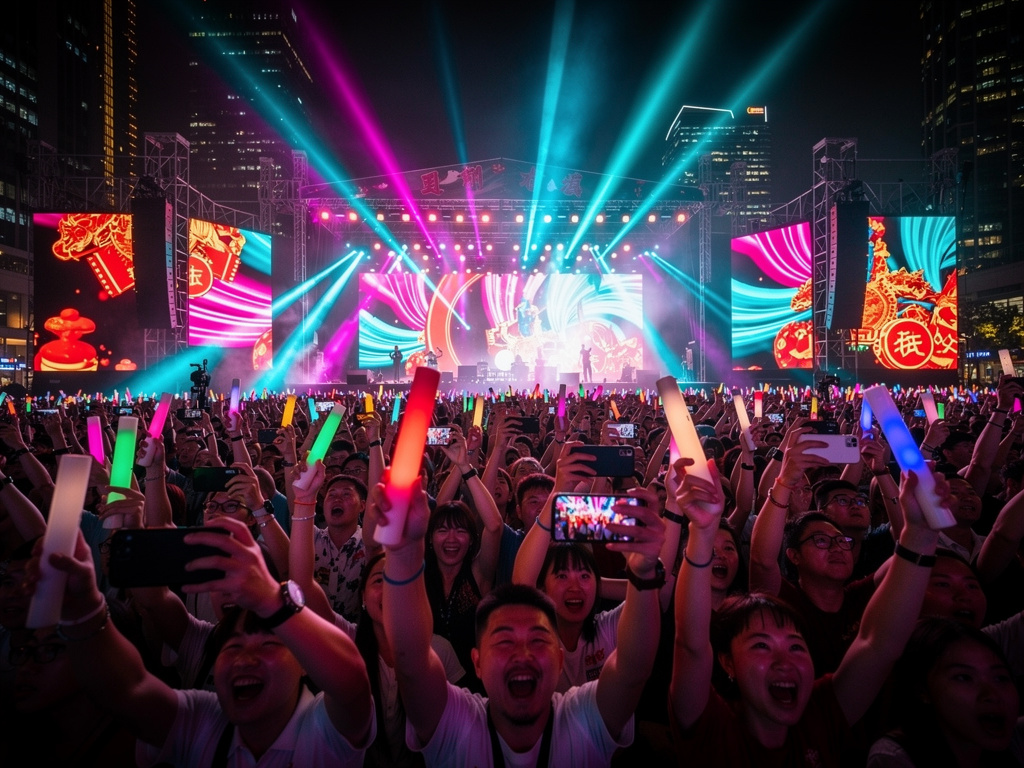
China's concert scene has experienced a significant boom since the pandemic, with events like the Xi Shi Music Festival in Zhuji, Zhejiang province, drawing tens of thousands of attendees. The festival, which features indie bands, saw a 29% increase in overnight visitors in 2026 compared to the previous year. This surge in popularity reflects a broader trend of young people in China seeking experiences and live events as a way to celebrate special occasions like the new year.
Entities: Xi Shi, Zhuji, Zhejiang province, China, Xi Shi Music Festival • Tone: positive • Sentiment: positive • Intent: inform
25-02-2026
The International Monetary Fund (IMF) has released a report stating that China's currency, the yuan, is undervalued by 16%. The article discusses the implications of this undervaluation on the global economy and China's economy. The yuan's exchange rate is considered a problem because it is out of balance with the rate that would stabilize China's economy and the world economy. The article also touches on China's leader Xi Jinping's desire to make the yuan a 'powerful' currency that could potentially rival the US dollar.
Entities: International Monetary Fund (IMF), China, yuan, Xi Jinping, US dollar • Tone: analytical • Sentiment: neutral • Intent: inform
25-02-2026
The article discusses the recent trend of 'Chinamaxxing' among young Americans, where they embrace Chinese culture and aesthetics on social media. This phenomenon is seen as a boost to China's soft power, as it reflects a growing fascination with Chinese culture and a shift in the American public's perception of China. Experts attribute this trend to dissatisfaction with life in the US, exposure to Chinese products and culture, and a decline in the US' global image. The trend is characterized by the adoption of Chinese fashion, cultural practices, and appreciation for China's technological advancements and urban development.
Entities: China, US, Beijing, America, Young Americans • Tone: analytical • Sentiment: neutral • Intent: inform
25-02-2026
The article highlights seven significant developments in the field of science, including the EU's ban on Chinese organizations from participating in critical tech programs, a leading computational biologist's return to China, and the discovery of a prized red gemstone in an ancient sacrificial pit. The EU's ban affects areas such as AI and semiconductor research, but specialists believe the impact may be limited due to already low levels of collaboration. Bao Zhirong, a world-renowned computational biologist, has joined the Southern University of Science and Technology in Shenzhen after 30 years in the US. Archaeologists have also uncovered carnelian beads in the Sanxingdui sacrificial pit, shedding light on the mysterious Shu kingdom.
Entities: European Union, China, AI, semiconductor research, Bao Zhirong • Tone: neutral • Sentiment: neutral • Intent: inform