24-03-2026

Global Energy Crisis Unfolds Amid Iran Conflict

Date: 24-03-2026
Sources: bbc.com: 2 | edition.cnn.com: 1
Image for cluster 6
Image Source:

Source: edition.cnn.com

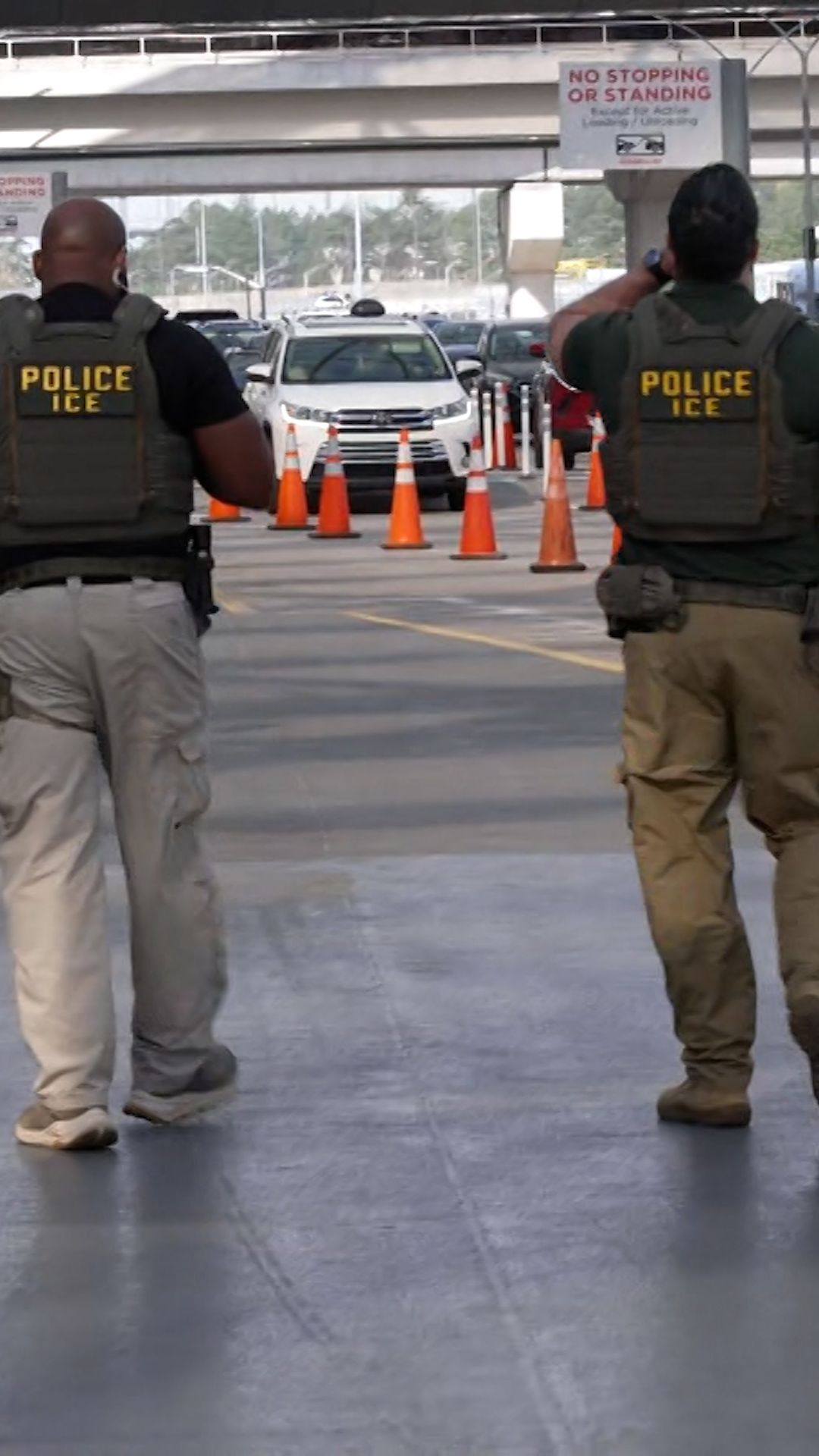
Image content: The main subject of the image is two law enforcement officers walking away from the camera at an airport or transportation hub. The visible elements include two men wearing "POLICE ICE" vests, a white SUV, and several orange cones directing traffic around it. The officers are approaching a pickup or drop-off area with a sign indicating "NO STOPPING OR STANDING". The image shows two law enforcement officers walking towards a vehicle surrounded by cones in a transportation hub. The officers wear tactical vests with "POLICE ICE" on the back. Orange cones are positioned around a white vehicle.

Summary

The ongoing conflict between the US, Israel, and Iran has triggered a global energy crisis, causing a surge in fuel prices. Countries in Asia and Europe have implemented various measures to mitigate the impact, including reducing fuel price hikes and introducing fuel rationing. China's easing of planned fuel price hikes and Slovenia's introduction of fuel rationing are among the measures taken to address the crisis.

Key Points

  • China reduces planned fuel price hikes amid energy crisis
  • Slovenia introduces fuel rationing to tackle 'fuel tourism'
  • Oil prices drop following reports of US-Iran negotiations

Articles in this Cluster

China eases planned fuel price hikes as Asia reels from energy crisis

China has reduced planned fuel price hikes amid an energy crisis triggered by the Iran conflict, which has caused a surge in energy costs globally. The initial price increase for gasoline and diesel was to be 2,205 yuan and 2,120 yuan per tonne, respectively, but has been halved to 1,160 yuan and 1,115 yuan. The conflict has affected oil supplies, with Iran effectively closing the Strait of Hormuz, a critical oil shipping channel. Other Asian countries, such as Japan, South Korea, the Philippines, Sri Lanka, and Thailand, have implemented cost-cutting measures to mitigate the impact of rising fuel prices. China's decision to ease fuel price hikes aims to reduce the burden on drivers, with over 300 million people in the country relying on petrol or diesel for their vehicles.
Entities: China, Iran, US, Gulf countries, Strait of HormuzTone: neutralSentiment: negativeIntent: inform

Slovenia becomes first EU state to introduce fuel rationing

Slovenia has become the first EU country to introduce fuel rationing due to disruptions in the global energy market caused by the US-Israeli strikes on Iran and its retaliation. The new measures restrict private motorists to a maximum purchase of 50 litres of fuel per day, while businesses and farmers are allowed 200 litres. The restrictions are being policed by petrol stations themselves, with employees required to ensure customers do not exceed the allowed amount. The move is aimed at tackling 'fuel tourism' from neighbouring countries, particularly Austria, where fuel prices are higher. The price difference has led to long queues at Slovenian petrol stations, with some Austrian drivers making cross-border trips to take advantage of the lower prices.
Entities: Slovenia, EU, US, Israel, IranTone: neutralSentiment: negativeIntent: inform

Oil prices just dropped. When will gas prices fall? | CNN Business

The article discusses the recent drop in oil prices following President Donald Trump's statement that the US and Iran are negotiating. CNN's David Goldman explains that it may take some time for gas prices to follow suit. The article is accompanied by several video clips and news snippets on unrelated topics, including the Supreme Court hearing a case on mail-in ballots, ICE agents deployed at airports, and Israeli settlers attacking Palestinian villages.
Entities: Oil prices, President Donald Trump, US, Iran, CNNTone: neutralSentiment: neutralIntent: inform