13-06-2026

2026 World Cup: Costly, Global Spectacle

Date: 13-06-2026
Part of: World Cup 2026: Politics, Spectacle, Strain (5 clusters · 10-06-2026 → 13-06-2026) →
Sources: bbc.com: 1 | cbsnews.com: 1 | nytimes.com: 1
Image for cluster 5
Image Prompt:

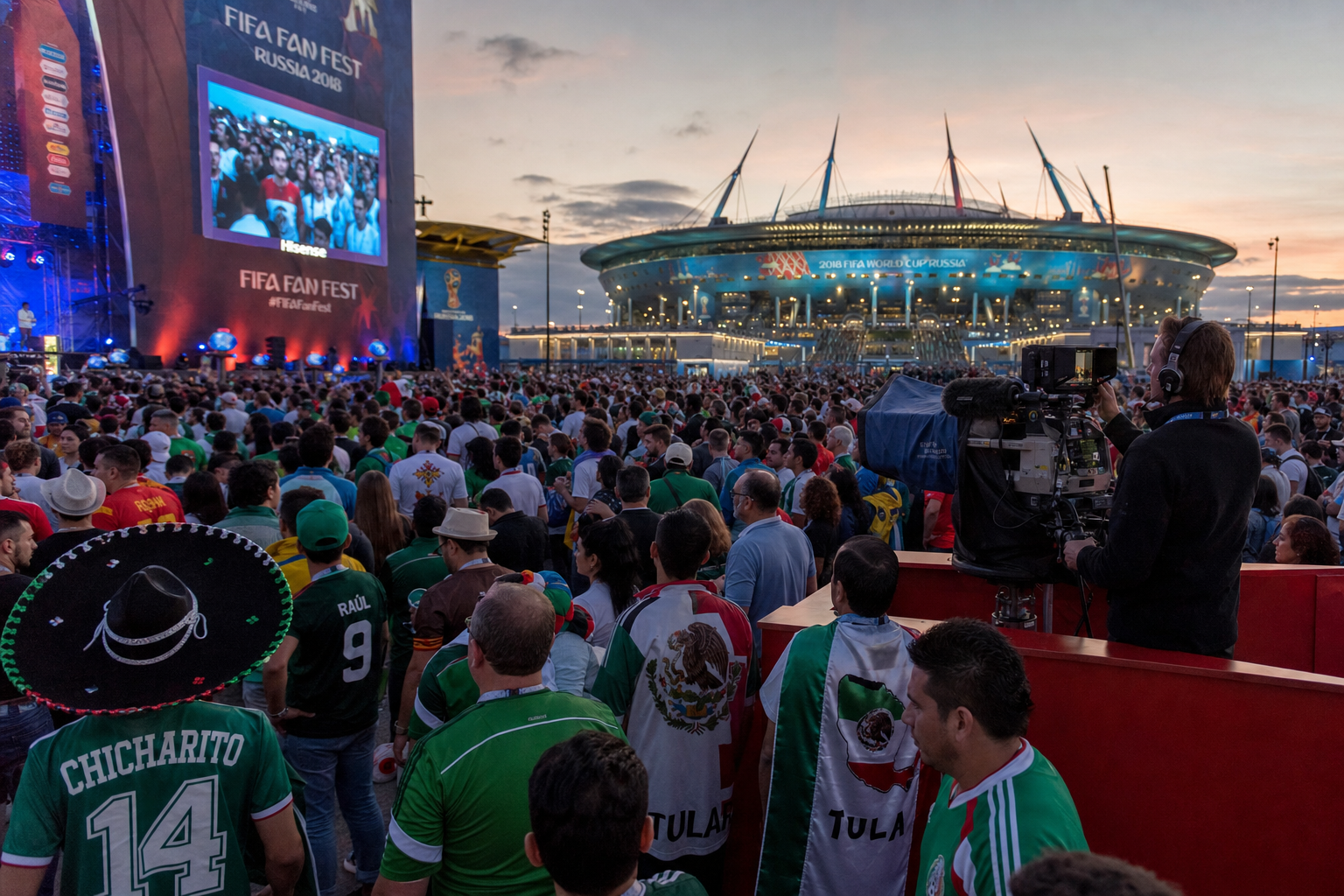
Packed World Cup fan zones and stadium entrances across Mexico, Canada, and the United States, supporters in national colors, ticket scanners, premium hospitality suites, broadcast crews, and opening ceremony performers creating a high-energy multinational scene, photojournalistic documentary photography, wide-angle 35mm realism with crisp detail, natural dusk and stadium floodlighting, lively, global, and commercially charged atmosphere

Summary

The 2026 FIFA Men’s World Cup is being framed as a uniquely large-scale and economically consequential tournament, combining political tension, multinational celebration, and an aggressively commercialized event model. One article argues that FIFA has turned the competition into a high-revenue spectacle built around dynamic pricing, premium hospitality, and borrowed NFL stadiums, shifting costs onto fans while promising global redistribution of profits. Another captures the tournament’s opening ceremonies in Mexico, Canada, and the United States, highlighting cultural performances, national identity, and Mexico’s opening-match victory over South Africa. A third serves as a live tracker of schedules, scores, groups, and team advancement chances, underscoring the expanded 48-team format and the complexity of following the tournament across all host nations. Together, the articles portray the World Cup as both a sporting event and a window into modern sports economics, international branding, and global fan experience.

Key Points

  • FIFA is monetizing the 2026 World Cup through dynamic pricing, premium hospitality, and a model that places more financial burden on fans.
  • The tournament is unfolding amid geopolitical and trade tensions involving the United States, Canada, Mexico, and other global flashpoints.
  • Opening ceremonies across Mexico, Canada, and the United States blend major pop performances with local cultural and national celebrations.
  • The competition’s expanded format and multi-host structure create a complex schedule tracked through live scores, groups, and advancement projections.
  • The event is portrayed as a case study in a K-shaped economy, where affluent fans can absorb rising costs while ordinary supporters face exclusion.

Articles in this Cluster

Why the economics make this the craziest World Cup ever

BBC economics editor Faisal Islam argues that the 2026 World Cup will be unprecedented not just for its politics but for its economics. The tournament arrives amid major geopolitical tensions, including war involving one host nation’s rival, renewed U.S.-Iran hostilities, and a broader trade conflict among the United States, Canada, and Mexico. But the core of the article is the way FIFA has transformed the event into a high-revenue, high-price spectacle. By staging matches largely in borrowed NFL stadiums across North America, FIFA has adopted a model closer to American sports economics than traditional football: dynamic pricing, premium hospitality, and revenue maximization over attendance. The article says this shifts costs away from taxpayers and toward fans, many of whom face extraordinary ticket and transport prices. It frames the tournament as a case study of a K-shaped economy, where wealthier consumers are able to pay rising prices while ordinary fans are squeezed out. FIFA argues the revenue will be redistributed to develop football globally, but the article emphasizes that this World Cup could become the most economically impactful ever because it changes who pays, who benefits, and how major sporting events are monetized.
Entities: Faisal Islam, BBC, FIFA, 2026 World Cup, Donald TrumpTone: analyticalSentiment: neutralIntent: analyze

World Cup opening ceremony in Mexico features Shakira, followed by a home team victory - CBS News

The article describes the kickoff of the 2026 FIFA Men’s World Cup with the first of three opening ceremonies held in Mexico. The celebration took place in Mexico City just before the tournament’s first match in the country and highlighted Indigenous and Aztec cultural traditions through dance, music, and pop performances. Mexican band Maná performed first, followed by artists including Danny Ocean, Los Ángeles Azules, and J Balvin. Colombian singer Shakira and Nigerian artist Burna Boy then performed “Dai Dai,” the official anthem of the tournament, which they co-wrote. After the ceremony, Mexico defeated South Africa 2-0 in the opening Group A match, energizing the home crowd. The article also explains that the World Cup’s ceremonial launch is split across all three host nations. Canada is scheduled to hold its opening ceremony in Toronto before its first match against Bosnia and Herzegovina, with performances by Alanis Morissette and Michael Bublé. The United States will host the third ceremony in Los Angeles before the U.S. Men’s National Team faces Paraguay, featuring Katy Perry, Future, Anitta, and others. Overall, the piece frames the World Cup as a multinational celebration blending sport, national identity, and entertainment across Mexico, Canada, and the United States.
Entities: 2026 FIFA Men’s World Cup, Mexico, Canada, United States, Mexico CityTone: neutralSentiment: neutralIntent: inform

2026 World Cup: Schedule and scores - The Athletic

This article is an interactive World Cup 2026 tracker focused on schedules, scores, and results, but the provided content is largely a snapshot of the competition structure rather than match coverage. It lists the participating teams and presents group-by-group “chances for each team,” suggesting an analytical preview of the tournament rather than a narrative report. The visible section highlights the expanded field for the 2026 FIFA Men’s World Cup, showing all qualified or projected nations arranged into groups A through L, along with percentage chances assigned to each team to advance or succeed. The article functions as a live reference tool for following the tournament and comparing teams’ prospects across the competition. Because no match results or game summaries are included in the provided text, the main value here is informational and predictive: it helps readers understand the tournament layout, the nations involved, and the relative likelihood of advancement based on the tracker’s projections. The overall emphasis is on organization, updates, and competition outlook rather than storytelling or opinion.
Entities: 2026 FIFA Men’s World Cup, The Athletic, New York Times, United States, EnglandTone: analyticalSentiment: neutralIntent: inform