12-07-2026
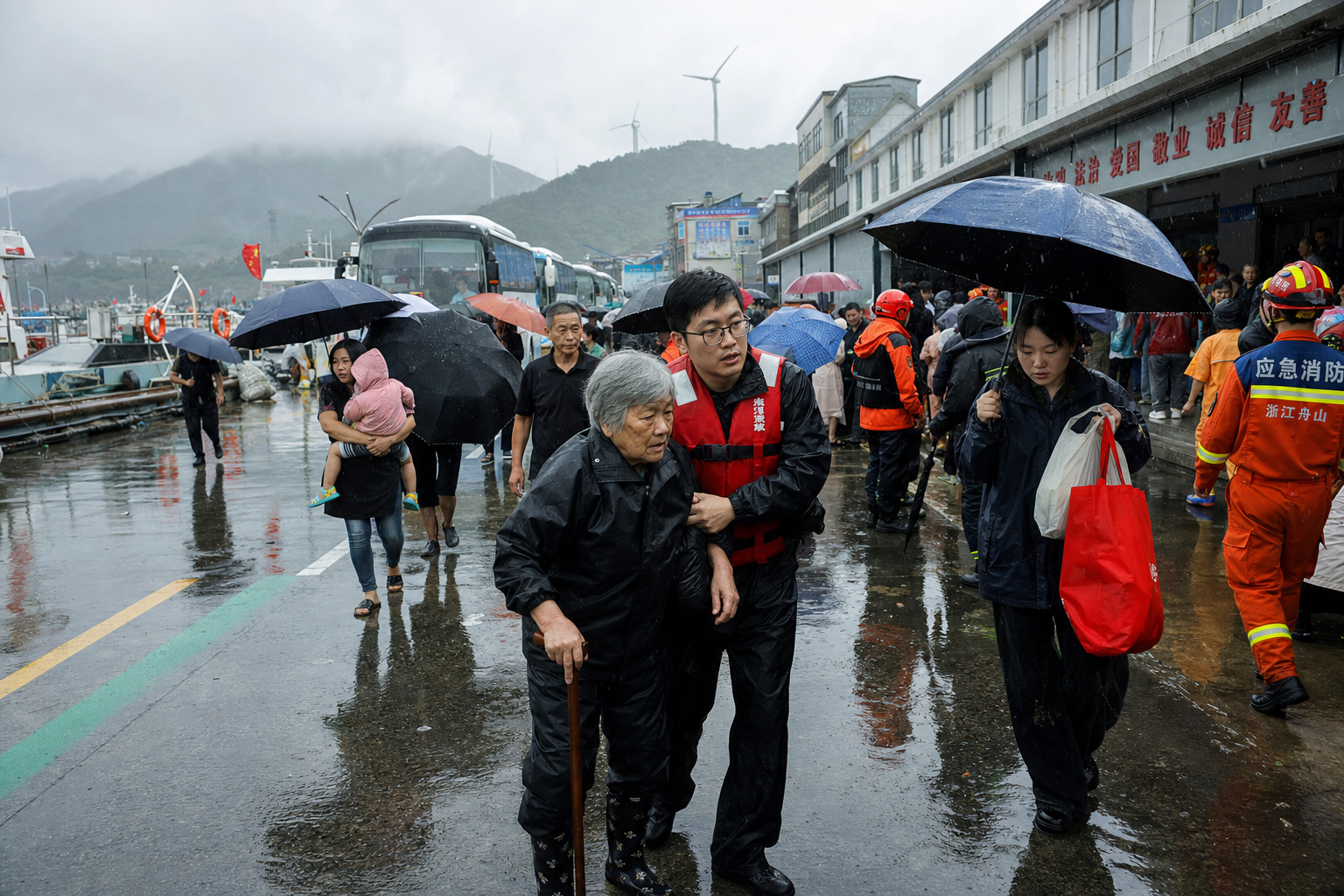
Typhoon Bavi made landfall in eastern China, prompting the evacuation of nearly two million people as authorities sought to reduce the risk from strong winds and heavy rain. The storm first struck near Taizhou and later made a second landfall near Wenzhou, affecting Zhejiang province and threatening surrounding regions as it moved inland. Although Bavi weakened from a super typhoon to a severe tropical storm, forecasters warned that its large rain bands still posed significant danger, especially from flooding and landslides.
The article places the China emergency in the wider regional context of Bavi’s destructive path across the Pacific. Before reaching China, the typhoon battered Guam and the Northern Mariana Islands, hit Japan’s Sakishima islands, and brought heavy rain to Taiwan, where thousands were evacuated and landslide risks were high. In the Philippines, landslides triggered by the storm killed at least 17 people. In China, more than 1.7 million people were evacuated in Zhejiang alone, with thousands more moved in neighboring provinces. Schools, workplaces, and outdoor activities were suspended, and transportation was heavily disrupted, with hundreds of flights and train services cancelled.
The storm hit China while the country was still coping with damage from Typhoon Maysak earlier in the week, which caused major loss of life and agricultural destruction. Overall, the article emphasizes the scale of the evacuation, the severity of the weather threat, and the regional impact of an unusually powerful storm system moving across East Asia.
Entities: Typhoon Bavi, China, Zhejiang province, Taizhou, Wenzhou • Tone: urgent • Sentiment: negative • Intent: inform
12-07-2026
Typhoon Bavi, the second major typhoon to hit China in a week, made landfall twice on China’s eastern coast after tracking through the Pacific and affecting several territories across the region. The storm first came ashore near Taizhou in Zhejiang province and then made a second landfall near Wenzhou, prompting massive precautionary evacuations and widespread shutdowns. Chinese authorities moved more than 1.7 million people from Zhejiang alone, with additional evacuations in neighboring provinces and in Beijing, as officials sought to avoid a worst-case scenario. Schools, work, outdoor activities, flights, and train services were suspended or cancelled across the affected area.
Although Bavi had weakened from a super typhoon to a severe tropical storm, it remained dangerous because of its huge rain bands and the risk of heavy rainfall, flooding, and landslides. The storm had already caused damage earlier in its path, including battering Guam and the Northern Mariana Islands, bringing heavy rain to Taiwan, and triggering landslides in the Philippines that killed at least 17 people. In Japan’s Sakishima islands, the storm caused injuries and power outages, while Taiwan and Japan avoided direct fatalities. The article also places Bavi in the context of another recent disaster, Typhoon Maysak, which had already left southern China heavily damaged and struggling with deaths, livestock losses, and agricultural destruction. Overall, the article describes East Asia bracing for dangerous weather, widespread disruption, and compounding disaster impacts across multiple countries.
Entities: Typhoon Bavi, China, Zhejiang province, Fujian province, Taizhou • Tone: urgent • Sentiment: negative • Intent: inform
12-07-2026
Typhoon Bavi has caused major travel disruption across eastern China, even as alerts were lowered in southern areas as the storm weakened and moved north. Making landfall in Zhejiang province on Saturday night, Bavi became the second major storm to strike China within a week, after Typhoon Saola. The storm triggered widespread transport chaos, including thousands of flight cancellations and train suspensions, particularly in major hubs such as Shanghai and Hangzhou. Chinese authorities evacuated more than 2.4 million people from areas in the storm’s path as a precaution against strong winds and heavy rain. According to state media, more than 2,800 flights were likely to be cancelled nationwide, with Shanghai’s Pudong and Hongqiao airports alone expected to cancel over 650 flights, about 30% of their capacity. Hangzhou Xiaoshan Airport also cancelled hundreds of flights, though services were expected to gradually resume as the storm’s influence weakened. Rail services were similarly affected, with key stations in Hangzhou halting operations for the day. Bavi’s broad reach and dual landfall underscore the scale of the disruption, while the easing of warnings in some southern areas suggests the storm’s impact is beginning to diminish even as its aftermath continues to affect travel.
Entities: Typhoon Bavi, eastern China, Shanghai, Hangzhou, Zhejiang • Tone: urgent • Sentiment: negative • Intent: inform