12-03-2026
Dozens of countries, including the UK and US, have agreed to release a record 400 million barrels of oil from their emergency reserves to tackle supply shortages and soaring prices caused by the US-Israel war with Iran. The release is more than double the previous record amount released by the International Energy Agency's (IEA) members following Russia's invasion of Ukraine in 2022. However, experts say the move will only be a short-term solution as it amounts to only around three or four days' worth of global supply. The IEA's member countries represent two-thirds of global energy production and 80% of consumption, and are required to keep 90 days' worth of their nation's oil use in reserve. The release will not help the global gas market, which is facing a 20% slump in liquid natural gas (LNG) supplies caused by the conflict.
Entities: International Energy Agency, UK, US, Iran, Russia • Tone: neutral • Sentiment: negative • Intent: inform
12-03-2026
Global oil prices surged on Thursday despite the International Energy Agency's (IEA) announcement to release a record 400 million barrels of oil to mitigate the economic impact of the US-Israel conflict with Iran. The price jump was triggered by three more cargo vessels being hit in the Gulf, exacerbating concerns over the security of energy shipments through the Strait of Hormuz. Brent crude rose by over 9% to top $100 a barrel before easing to $97.50. The IEA's decision, while historically significant, is seen as a temporary buffer against prolonged disruption. Oil markets have been volatile since the US and Israel launched airstrikes against Iran on February 28, pushing fuel prices up globally. Countries in Asia, heavily reliant on Middle Eastern energy, have been particularly affected, with long queues at petrol stations and measures to conserve energy being implemented.
Entities: International Energy Agency, Iran, US, Israel, Strait of Hormuz • Tone: neutral • Sentiment: negative • Intent: inform
12-03-2026
The International Energy Agency (IEA) has announced the release of 400 million barrels of oil from its emergency reserves in an effort to lower energy prices amid the Iran War, which has effectively closed the Strait of Hormuz, a critical waterway for global oil supply. The move is the largest release in the IEA's history and aims to maintain energy security and offset the supply lost due to the closure of the strait. The IEA holds a stockpile of roughly 1.2 billion barrels of oil, and the release is expected to help bring down global oil prices, which have risen due to concerns over the conflict's impact on oil supply. However, experts note that the sustainability of lower oil prices depends on the conflict's evolution and China's potential release of its oil reserves.
Entities: International Energy Agency, Strait of Hormuz, Iran, Fatih Birol, Russia • Tone: neutral • Sentiment: negative • Intent: inform
12-03-2026
The White House is aware that Gulf countries are running low on missile interceptors to defend against Iranian attacks. Despite Defense Secretary Pete Hegseth's assurance that the US is 'very prepared' to help, sources indicate that the resupply process is not happening as quickly as needed. Iran has continued to launch missiles and drones at Gulf states, resulting in casualties and damage. Various Gulf countries, including Bahrain, Kuwait, Qatar, UAE, and Saudi Arabia, have reported intercepting numerous missiles and drones, but their supplies are dwindling.
Entities: White House, Gulf countries, Iran, United States, Defense Secretary Pete Hegseth • Tone: neutral • Sentiment: negative • Intent: inform
12-03-2026
Asia-Pacific markets fell on Thursday due to volatile oil prices and escalating tensions in the Middle East, despite the US and its allies announcing an emergency release of crude reserves. The International Energy Agency (IEA) agreed to release 400 million barrels of oil, while the US will release 172 million barrels from its Strategic Petroleum Reserve. The announcement led to a temporary surge in oil prices, with US West Texas Intermediate futures jumping 3.82% to $90.55 per barrel and global benchmark Brent trading 4.19% higher at $95.8. However, the gains were short-lived, and Brent futures earlier touched over $100 a barrel before cutting gains. The market downturn was seen across various Asia-Pacific indices, including Japan's Nikkei 225, Australia's S&P/ASX 200, and Hong Kong's Hang Seng index.
Entities: International Energy Agency, US, Strategic Petroleum Reserve, Iran, Middle East • Tone: neutral • Sentiment: negative • Intent: inform
12-03-2026
The article discusses the recent surge in oil prices despite the International Energy Agency (IEA) and the U.S. administration releasing a record amount of oil from their strategic reserves. The release failed to calm the market, with Brent crude topping $100 per barrel. The energy picture is complicated by Iran's continued supply of crude oil to China despite the ongoing war between the U.S.-Israel and Iran. Global equities are sensitive to the energy moves, with Asian markets falling and European and U.S. futures pointing to declines. The article also mentions President Donald Trump's launch of trade probes into several Asian economies, including Japan and China, which is adding to the market uncertainty. The war in Iran is also impacting tech companies' investments in AI infrastructure in the Middle East.
Entities: Leonie Kidd, London, International Energy Agency, U.S. administration, Brent crude • Tone: neutral • Sentiment: negative • Intent: inform
12-03-2026
European stocks are expected to open lower on Thursday as investors monitor the Iran war and global oil prices. The International Energy Agency (IEA) agreed to release 400 million barrels of oil to address the supply disruption triggered by the war, but oil prices jumped over 8% overnight as traders remain unconvinced that the release will offset the global supply shock. The US Trump administration announced new trade investigations into the European Union and other economies under Section 301 of the Trade Act of 1974.
Entities: European stocks, Iran, International Energy Agency, FTSE index, DAX • Tone: neutral • Sentiment: negative • Intent: inform
12-03-2026
Oil prices surged over 8% despite the International Energy Agency (IEA) announcing the largest emergency release of crude reserves in history. The IEA's 32 member countries will release 400 million barrels of oil, with the US releasing 172 million barrels from its Strategic Petroleum Reserve. However, traders remain skeptical that the measure will offset the supply shock caused by the war in the Middle East, as the release may take 60-90 days to meaningfully reach the market. Experts warn that the oil shortage risk is acute, and prices may remain high even after the war ends.
Entities: International Energy Agency, IEA, West Texas Intermediate, Brent crude, United States • Tone: neutral • Sentiment: negative • Intent: inform
12-03-2026
Three foreign vessels were struck in the Persian Gulf overnight, authorities said, as attacks intensify on vessels sailing through or near the strategically vital Strait of Hormuz. The incidents come after Iran warned the world to prepare for $200 oil prices following airstrikes by the US and Israel on February 28. Shipping traffic through the Strait of Hormuz has virtually ground to a halt, with several incidents reported in recent days. Crude prices were sharply higher on Thursday morning, with international benchmark Brent crude futures trading 5.7% higher at $97.16 per barrel.
Entities: Iran, United Arab Emirates, Iraq, Strait of Hormuz, Persian Gulf • Tone: urgent • Sentiment: negative • Intent: inform
12-03-2026
The article discusses the challenges of clearing the Strait of Hormuz of Iran's drones and mines amid the ongoing conflict between the US, Israel, and Iran. The Strait, a critical waterway for global oil and LNG shipments, has become increasingly hazardous since the start of Operation Epic Fury. The article questions whether the US can militarily clear the strait and highlights the potential risks of escorting oil tankers with warships, which could provide Iran with 'juicy American targets'. The piece also touches on the broader implications of the conflict, including its impact on the global energy market and the potential for further escalation.
Entities: Strait of Hormuz, Iran, America, Operation Epic Fury, Israel • Tone: analytical • Sentiment: negative • Intent: inform
12-03-2026
The article discusses China's reaction to a hypothetical war between the U.S. and Iran, with China openly mocking the U.S. The content is primarily presented through a video report by CNN's Will Ripley on Erin Burnett OutFront. The article includes various video links related to the topic, including analysis by retired Gen. Petraeus on Iran's drone warfare and reactions from political figures like Murkowski and Trump. The overall tone is informative with a critical undertone towards the U.S. involvement in potential conflicts. The sentiment is generally neutral, aiming to report on different perspectives. The primary intent is to inform viewers about the geopolitical dynamics and reactions to a potential U.S.-Iran conflict.
Entities: China, U.S., Iran, CNN, Will Ripley • Tone: neutral • Sentiment: negative • Intent: inform
12-03-2026
The conflict between the US, Israel, and Iran continues to escalate, with Iran launching attacks on global energy supplies and neighbors. Six ships have been attacked in the Persian Gulf in two days, causing oil prices to surge above $100 per barrel. The US has granted India a 30-day waiver to buy Russian oil despite Trump's pressure to shift away from it. The conflict is having far-reaching consequences, with countries in Asia taking measures to mitigate the impact of energy shortages and price hikes. Iran has attacked oil tankers in Iraqi waters, and a fuel depot in Bahrain has been set on fire. The US military has also struck Iranian military aircraft at an airfield in Kerman, southeastern Iran.
Entities: Iran, US, Israel, Donald Trump, Iraq • Tone: urgent • Sentiment: negative • Intent: inform
12-03-2026
Oil prices surged past $100 per barrel again during overnight trade as the US and Israel's war with Iran continues to impact global fuel supplies. The jump came despite 32 countries agreeing to a record release of oil into the global market. Brent crude hovered around $100 a barrel overnight before paring some gains to trade at $98.2, a 6.8% increase. The conflict in the Middle East has led to the shutdown of the Strait of Hormuz, a critical oil shipping route, causing huge volatility in oil prices. The release of 400 million barrels of oil by the International Energy Agency member countries was the largest in history, but it appears insufficient to calm investors' jitters over continued energy disruption.
Entities: John Liu, US, Israel, Iran, Exxon Mobil Corp. • Tone: neutral • Sentiment: negative • Intent: inform
12-03-2026
The article discusses how the recent conflict in the Middle East has severely disrupted commercial air travel, leading to a surge in demand for private charter flights among the wealthy. Private jet companies have seen a significant increase in requests, with prices skyrocketing due to high demand, limited aircraft availability, and increased insurance costs. While private charters provide a solution for those who can afford it, they are not a viable option for the majority of travelers and will not significantly reduce the travel disruption in the region.
Entities: Middle East, US, Israel, Iran, Gulf region • Tone: neutral • Sentiment: negative • Intent: inform
12-03-2026
President Donald Trump claimed at a rally in Kentucky that 'we've won' the war with Iran, despite not providing substantial evidence. The statement came as the US is involved in a conflict with Iran, and Trump also touted an international agreement to release stockpiled oil reserves. The war in Iran has led to increased gas prices, which Trump had previously said would 'destroy the country.' Other news related to the conflict and Trump's presidency was also discussed, including Senator John Cornyn's shift on the filibuster and Trump's offer to endorse Jake Paul for Congress.
Entities: Donald Trump, Iran, Kentucky, CNN, John Cornyn • Tone: neutral • Sentiment: negative • Intent: inform
12-03-2026
The article discusses how President Donald Trump's conflict with Iran is complicating his attempts to shift focus to the economy, a key priority for Republican success in the November midterm elections. Trump's messaging on the war has been inconsistent, causing concern among Republicans and voters. The administration has tried to clarify the war's objectives and timeline, but Trump's statements have been contradictory, fueling worries about a prolonged conflict. Despite this, Trump believes that eliminating the Iranian nuclear threat will be popular in the long term, and his allies are urging him to stay the course.
Entities: Donald Trump, Iran, Republican Party, Middle East, United States • Tone: neutral • Sentiment: negative • Intent: inform
12-03-2026
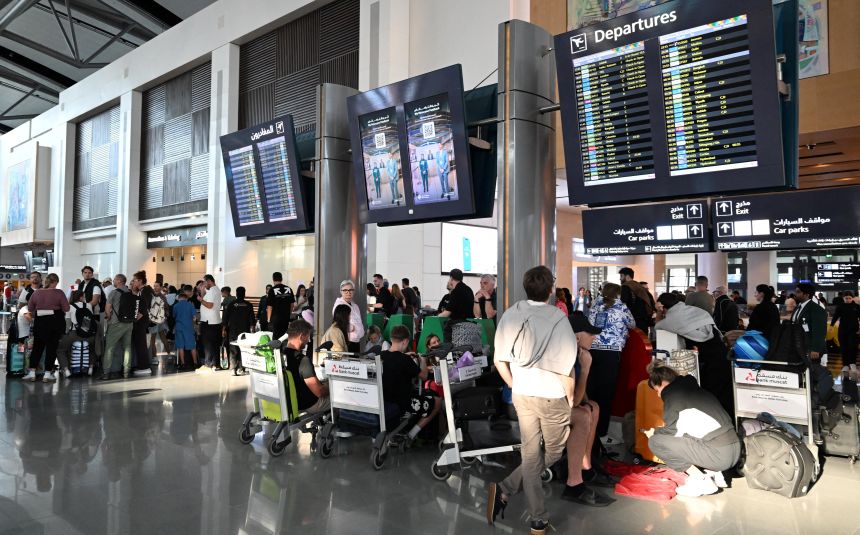
The conflict between the US and Iran has entered its second week, causing flight cancellations and airport closures across the Middle East, leaving many Americans stranded. A Los Angeles man, Yahir, who was in Bahrain when the conflict erupted, shared his experience of surviving an alleged Iranian drone strike on a high-rise building where he was staying. Yahir expressed frustration with the local US Embassy, stating that they have provided little assistance and that the overall experience has been 'terrible.' The ongoing missile strikes have profoundly affected daily life in Bahrain, turning once-bustling areas into 'ghost towns.' Yahir is still waiting for help to get home, claiming that local US embassies and State Department officials have put him through a maze of logistical hurdles with no clear next steps.
Entities: Yahir, Bahrain, Iran, United States, Los Angeles • Tone: urgent • Sentiment: negative • Intent: inform
12-03-2026
The article reports on the escalating conflict in the Middle East, where an Israeli strike killed 7 people in central Beirut, Lebanon, amid a surge in attacks on Gulf ships. Iran-backed Hezbollah launched missiles at Israel, while explosions struck two foreign oil tankers in the Persian Gulf off Iraq, killing at least one person. Bahrain's Ministry of Interior reported an Iranian attack on fuel tanks, advising residents to stay home. The US Department of Energy announced the release of 172 million barrels from the strategic petroleum reserve to mitigate the impact of the conflict on oil prices. The UN Security Council passed a resolution calling for Iran to halt its attacks on Gulf states, citing a serious threat to international peace and security.
Entities: Israel, Lebanon, Iran, Hezbollah, United States • Tone: urgent • Sentiment: negative • Intent: inform
12-03-2026
The International Energy Agency (IEA) has announced the largest ever release of strategic oil reserves to mitigate supply disruptions caused by the Middle East conflict. 32 countries, including the UK, are participating, releasing 400 million barrels into the market. The UK is contributing 13.5 million barrels. Despite this, oil prices have not significantly decreased, with Brent crude trading at $90.63 per barrel after the announcement. The IEA's emergency stocks will be released over a timeframe suitable for each member country's national circumstances. The conflict has severely impacted oil output and deliveries from the Gulf region, with exports currently less than 10% of pre-conflict levels.
Entities: International Energy Agency (IEA), UK, G7, Brent crude, Gulf region • Tone: neutral • Sentiment: negative • Intent: inform
12-03-2026
The International Energy Agency (IEA) announced an unprecedented release of 400 million barrels of oil from its member countries' stockpiles to address the global energy crisis caused by the conflict in the Persian Gulf. However, despite this extraordinary measure, oil prices remained high, with Brent crude still around 25% higher than before the attacks in the Gulf began. The article explains that the issue is not just the amount of oil available, but the daily flow of oil through the global system, which is currently short by around 15 million barrels. Even with the IEA's emergency release, the world is still expected to be short of oil by at least 4 million barrels per day. The article highlights the far-reaching impacts of the energy crisis, including higher petrol prices, rationing of LPG supplies, and disruptions to industries and households around the world.
Entities: International Energy Agency (IEA), Persian Gulf, Strait of Hormuz, Saudi Arabia, United Arab Emirates • Tone: analytical • Sentiment: negative • Intent: inform
12-03-2026
Cathay Pacific Airways is set to nearly double its fuel surcharges on Wednesday due to surging fuel costs driven by the Iran war. The increase will affect long-haul and medium-haul flights, with fuel surcharges rising by over 100%. This move follows a similar decision by Hong Kong Airlines, which increased its fuel surcharge by up to 35%. Cathay Pacific cited the doubling of jet fuel prices since March as the reason for the hike.
Entities: Cathay Pacific Airways, Hong Kong, Hong Kong Airlines, Iran, Middle East • Tone: neutral • Sentiment: negative • Intent: inform
12-03-2026
The article discusses how OpenClaw, an open-source artificial intelligence tool, has sparked a frenzy among Chinese investors, driving up shares of companies compatible with the technology despite the broader market gloom caused by the US-Iran war. The 'lobster' trade, named after OpenClaw's logo, has seen companies like Hangzhou Shunwang Technology, Talkweb Information System, and Beijing Vrv Software surge in value. Analysts believe OpenClaw has the potential to accelerate AI adoption and make a breakthrough in connecting large-language models to end-user scenarios.
Entities: OpenClaw, China, US, Iran, Hangzhou Shunwang Technology • Tone: neutral • Sentiment: positive • Intent: inform
12-03-2026
The article reports on the escalating conflict between the US, Israel, and Iran, with Iran launching attacks on oil tankers in Iraqi waters and oil facilities in Bahrain, defying US President Donald Trump's claim that the US had 'won' the war. The conflict has resulted in over 2,000 deaths, mostly Iranians and Lebanese, and has thrown global energy markets into chaos. Oil prices have surged, with Iran warning of prices reaching $200 a barrel. The US and Israel have targeted Iranian naval ships and facilities, while Iran has deployed mines in the Strait of Hormuz, a crucial oil route. The international community is responding, with the Group of Seven nations considering providing escort for ships in the Gulf.
Entities: Donald Trump, Iran, United States, Israel, Iraq • Tone: urgent • Sentiment: negative • Intent: inform
12-03-2026
The article discusses the energy crisis unfolding in Asia due to the ongoing conflict between the US, Israel, and Iran. The war has disrupted oil supplies, causing prices to surge and prompting various Asian countries to implement measures to mitigate the impact. Countries such as South Korea, Thailand, Bangladesh, Myanmar, Pakistan, the Philippines, and Vietnam have introduced austerity measures, including fuel rationing, price caps, and reduced government operations. The article highlights the uncertainty and concern among Asian governments, companies, and consumers, with experts warning of a potential global economic crisis if the Strait of Hormuz remains closed.
Entities: Asia, Iran, US, Israel, Donald Trump • Tone: negative • Sentiment: negative • Intent: inform