12-02-2026
The article discusses the recent revolution in Bangladesh that brought down the government of Sheikh Hasina Wajed and her Awami League party. Eighteen months later, the country is set to hold its first competitive general election since 2008 on February 12th. Despite concerns about potential violence, the election period has so far remained peaceful. The article highlights the significance of this moment in Bangladesh's history and the challenges that lie ahead for the country's new government.
Entities: Bangladesh, Sheikh Hasina Wajed, Awami League, February 12th, February • Tone: analytical • Sentiment: neutral • Intent: inform
12-02-2026
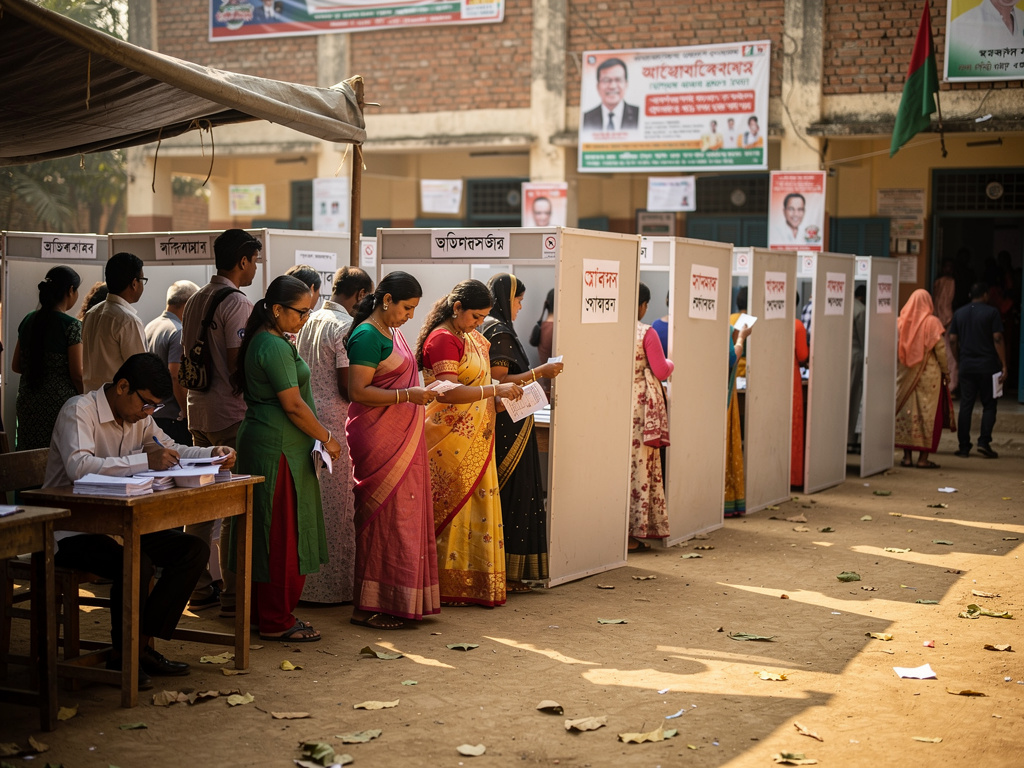
Bangladesh held its first election since a deadly 2024 uprising, with voters queuing up at polling stations across the country. The election pits former Prime Minister Sheikh Hasina's sidelined Awami League opponents against a powerful political heir, Tarique Rahman, leading the Bangladesh Nationalist Party (BNP), and an Islamist-led coalition headed by Jamaat e Islami's Shafiqur Rahman. The interim government, led by Nobel Peace Prize winner Muhammad Yunus, has barred Hasina's Awami League from contesting the polls and championed democratic reforms. The election's outcome is uncertain, with opinion polls varying widely, and concerns about 'growing intolerance, threats, and attacks' and disinformation. The next government will face significant challenges, including a battered economy and delicate relations with neighboring India.
Entities: Bangladesh, Sheikh Hasina, Tarique Rahman, Muhammad Yunus, Jamaat e Islami • Tone: neutral • Sentiment: neutral • Intent: inform
12-02-2026
Bangladesh is holding its first general elections since the 2024 student protests that toppled the authoritarian government. The student movement, which demanded democratic reforms and an end to corruption, is now worried that their efforts may not lead to lasting change. Despite the change in police uniforms to distance themselves from the brutal crackdown on protesters, many students feel that the system remains unchanged. The National Citizen Party, formed by students, has made compromises with other parties, including Jamaat-e-Islami, which has upset some students. The election also includes a referendum on the July Charter, a document outlining proposed reforms, but the proposals have been watered down due to opposition from major parties. Many Bangladeshis are anxious about the outcome, with some expressing optimism and others fearing that the movement's goals will not be achieved.
Entities: Bangladesh, Dhaka, University of Dhaka, Tanjina Tammim Hapsa, Sheikh Hasina • Tone: neutral • Sentiment: negative • Intent: inform