09-07-2026
The article investigates the rapid collapse of Graham Platner’s Maine Senate campaign, which had once been hailed by progressives as a model of economic populism and a potential path to defeating Republican Susan Collins. It traces how Platner, an oyster farmer and Marine veteran, was recruited by out-of-state progressive operatives and quickly elevated as a political star despite warnings from people close to him about his mental health, wartime trauma, and personal instability. Behind the scenes, the campaign was portrayed as disorganized and overly protective, with key advisers failing to fully vet damaging aspects of Platner’s past.
As the campaign gained momentum, more controversy emerged: reports of sexual messages with multiple women, concerns about whether the campaign had adequately investigated his background, and the revelation of a chest tattoo widely recognized as a Nazi symbol that Platner had gotten during military service. The article presents the campaign as repeatedly assuring allies that no further damaging revelations existed, only for each new disclosure to undermine that confidence. The final blow came when a former partner accused Platner of rape, which he denied. Within a day, Democrats across the party called for him to withdraw, and the once-promising campaign became a case study in misjudgment, weak vetting, and a political implosion that shocked Democratic strategists who had seen Platner as one of their best chances to flip a Senate seat.
Entities: Graham Platner, Maine, Susan Collins, Dan Moraff, Leanne Fan • Tone: analytical • Sentiment: negative • Intent: analyze
09-07-2026
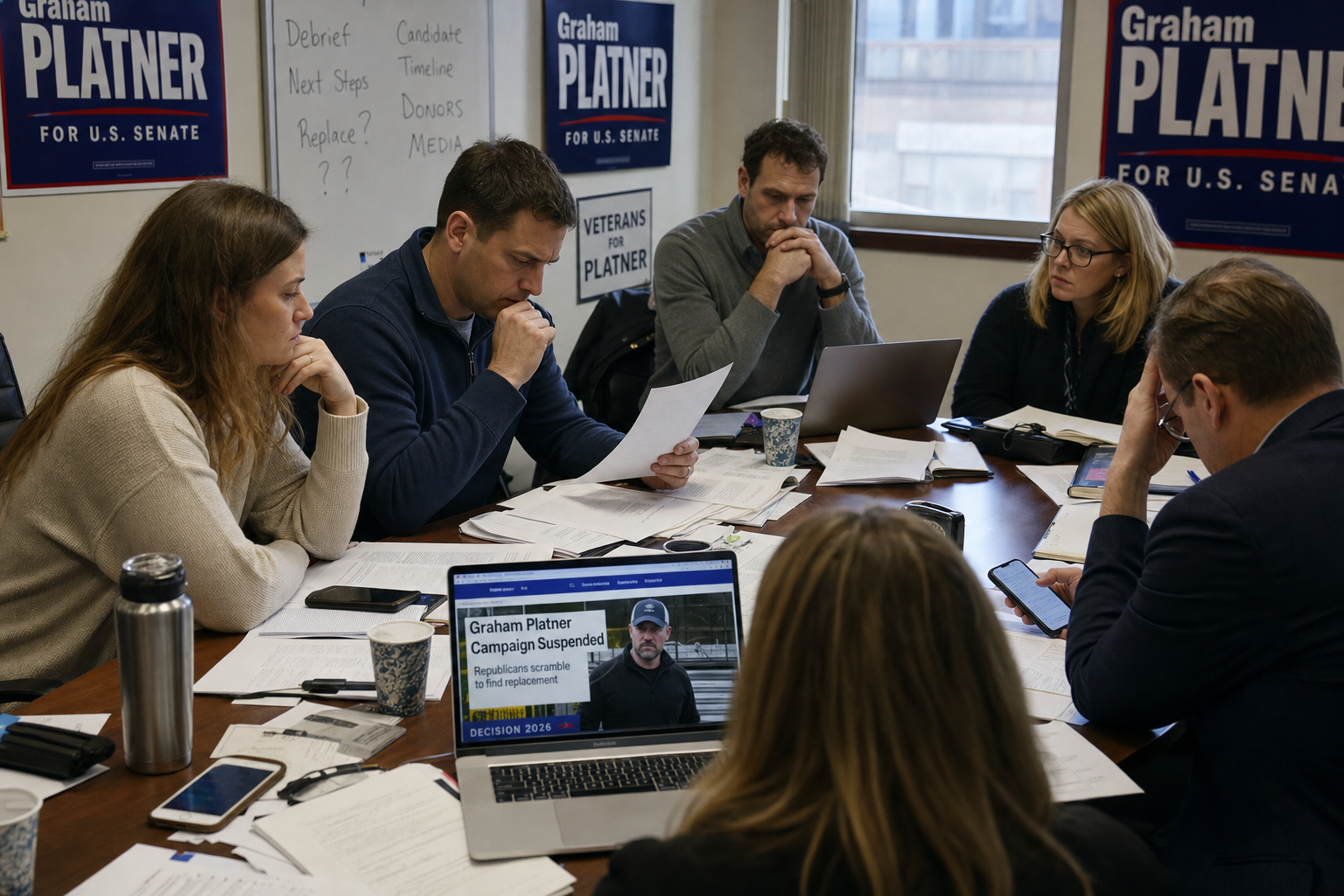
Graham Platner’s suspension of his Maine Senate campaign has thrown Maine Democrats into a difficult and time-sensitive scramble to replace him, leaving the party less than three weeks to field a new challenger to Republican Senator Susan Collins. Platner stepped aside under heavy pressure from party leaders after a rape allegation he denies, ending what the state party described as an unusually energetic and enthusiastic insurgent campaign. The article focuses on what happens next: how Democrats will choose a replacement, who is already positioning to run, and whether Platner will have any influence over the process.
There is no fixed rule for selecting a substitute nominee, but state party leaders said they will hold some form of nominating convention and soon announce a timeline, participation rules, and candidate requirements. Under Maine law, the deadline to name a new nominee is July 27. Several possible contenders have already emerged. Troy Jackson, a former Maine Senate president seen as a favorite among some progressives, declared his candidacy, as did Jordan Wood, a progressive who recently lost a House primary. Dan Kleban, a brewery founder, also announced he would run, and other names under discussion include Nirav Shah and Shenna Bellows, both of whom recently lost in the state’s ranked-choice gubernatorial primary.
The piece also highlights internal tensions within the party. Platner’s team had been accused of trying to shape the replacement process, while party leaders insisted he would have no role. Platner, for his part, said the replacement should be chosen transparently and democratically by the voters who powered his campaign. Party chair Charles F. Dingman emphasized unity and said the convention process would be representative, but the exact rules remained unsettled. Overall, the article portrays a high-stakes, compressed, and somewhat chaotic transition for Maine Democrats in a crucial Senate race.
Entities: Graham Platner, Maine Democratic Party, Susan Collins, Maine, Troy Jackson • Tone: analytical • Sentiment: neutral • Intent: inform
09-07-2026
Graham Platner, the Democratic nominee for U.S. Senate in Maine, suspended his campaign after a series of damaging scandals culminated in a rape accusation by a former partner, Jenny Racicot. The article explains that Platner’s rise as a progressive outsider quickly unraveled amid revelations about an offensive tattoo resembling a Nazi symbol, old Reddit posts, and allegations of sexual misconduct. The final accusation, first reported by Politico, proved politically fatal: major Democratic leaders and groups withdrew support, including Sen. Elizabeth Warren, Rep. Ro Khanna, Sen. Ruben Gallego, and the Senate Democratic campaign arm. Senate leaders Chuck Schumer and Kirsten Gillibrand said they would not invest in the race while Platner remained the nominee, and Sen. Bernie Sanders also urged him to step aside. Platner maintained that the allegations were false and framed his suspension as a move forced by party power structures rather than an admission of guilt. His withdrawal throws a critical Maine Senate contest into uncertainty, as Democrats hope to challenge Sen. Susan Collins and are now scrambling to select a replacement nominee before the July 27 deadline. The piece also outlines possible replacement candidates, the compressed timeline, and the significance of the race for control of the Senate.
Entities: Graham Platner, Maine, Susan Collins, Democratic Party, Maine Democratic Party • Tone: analytical • Sentiment: negative • Intent: inform