06-04-2026
The Artemis II crew has reached the halfway point of their journey to the Moon, marking the first time humans have traveled beyond Earth's orbit since 1972. Following a successful trans-lunar injection burn, the Orion spacecraft is currently positioned approximately 142,000 miles from Earth and 132,000 miles from the Moon. Mission commander Reid Wiseman has captured a series of high-resolution, 'spectacular' images of Earth, including a shot titled 'Hello, World' which depicts the Atlantic Ocean, the atmosphere's glow, and the planet Venus. Other images highlight the 'terminator'—the dividing line between day and night—and the twinkling lights of human civilization on the dark side of the planet.
The crew, which includes astronaut Christina Koch and mission specialist Jeremy Hansen, expressed immense joy upon hitting this milestone. The astronauts spent significant time observing the view from the spacecraft's windows, with Wiseman noting the technical challenge of adjusting exposure settings for such a distant subject. NASA has further emphasized the historical significance of the mission by releasing a side-by-side comparison of the current view of Earth with a similar image taken during the Apollo 17 mission in 1972.
The Artemis II mission is following a looping trajectory that will take the crew around the far side of the Moon. They are expected to pass the lunar far side on April 6 and return to Earth for a Pacific Ocean splashdown on April 10.
Entities: Reid Wiseman, Christina Koch, Jeremy Hansen, NASA, Orion spacecraft • Tone: analytical • Sentiment: positive • Intent: inform
06-04-2026
The provided text is a video-based news feature from CNN that offers a glimpse into the daily routines and logistical challenges faced by astronauts aboard the Artemis II space mission. The report highlights the extreme constraints of living and working within a space capsule roughly the size of two minivans. Key aspects of their daily existence include the use of specialized, compact gym equipment—smaller than a standard carry-on bag—to maintain physical health in microgravity. The feature also touches upon the mundane but critical difficulties of space travel, such as the danger of floating crumbs in zero gravity and the necessity of sleeping in suspended sleeping bags to remain secure. By focusing on these intimate details, the piece provides viewers with a human-centric perspective on the complexities of long-duration lunar missions and the adaptability required of the crew.
Entities: Artemis II, NASA, CNN, Max Feliu, Moon • Tone: positive • Sentiment: neutral • Intent: inform
06-04-2026
The provided content consists of a series of short news clips and captions from CNN, primarily focusing on the Artemis II lunar mission. The central piece highlights an interview with the brother of Mission Commander Reid Wiseman, who describes the 'serious soul searching' and emotional difficulty Wiseman experienced when deciding to lead the historic mission to the moon. This personal perspective underscores the psychological weight and responsibility associated with leading a high-stakes space exploration endeavor.
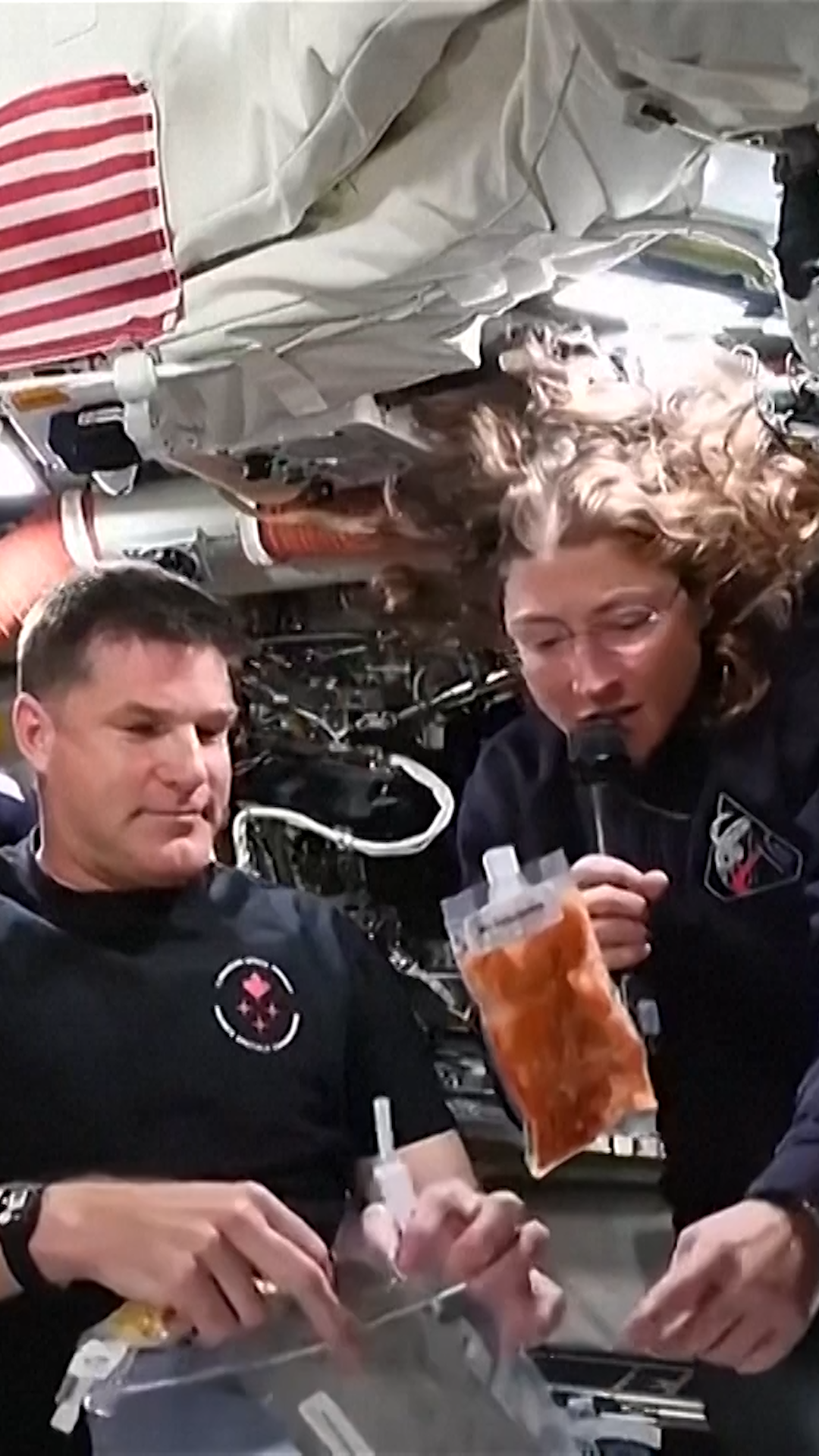
Beyond the personal narrative of the commander, the content provides several updates on the Artemis II crew's current status. The mission is described as a nearly 10-day expedition designed to fly around the moon and return to Earth. The reports touch upon the mundane yet challenging aspects of space travel, such as the crew demonstrating how to eat shrimp cocktail in zero gravity and dealing with a technical 'roadblock' involving the spacecraft's wastewater system, specifically a potential issue with frozen urine.
Additionally, the content highlights the international nature of the mission, featuring Jeremy Hansen, the sole Canadian astronaut on board, who maintained communication with his home country during the journey. Interspersed with these space updates are unrelated human-interest stories, including the New York City Easter Parade, a plane landing on a Pennsylvania highway, and Jack Black's appearance on Saturday Night Live, though the primary thematic focus remains on the Artemis II mission's human and technical challenges.
Entities: Reid Wiseman, Jeremy Hansen, Erin Burnett, NASA, CNN • Tone: analytical • Sentiment: neutral • Intent: inform
06-04-2026
The provided text is a collection of video snippets from CNN, primarily focusing on the Artemis II lunar mission. The lead story highlights a technical malfunction aboard the Orion spacecraft, where the crew encountered a significant 'roadblock' regarding the expulsion of wastewater. Preliminary indications suggest that the issue may be caused by frozen urine obstructing the system. This malfunction presents a critical challenge for the crew as they navigate their journey toward the moon.
Beyond the toilet malfunction, the content provides glimpses into the daily lives of the Artemis II astronauts, including a demonstration of how they consume shrimp cocktail in the microgravity environment of space. The mission is described as a nearly 10-day expedition designed to fly around the moon and return to Earth. Additionally, the text mentions Jeremy Hansen, the sole Canadian astronaut on the mission, who maintained communication with his home country during the transit. The remaining portions of the text are unrelated news clips covering a New York City Easter Parade, a plane landing on a Pennsylvania highway, Jack Black's appearance on Saturday Night Live, and a marshmallow drop event in Detroit.
Entities: Artemis II, NASA, Orion spacecraft, Jeremy Hansen, Moon • Tone: urgent • Sentiment: negative • Intent: inform
06-04-2026
The provided text is a collection of short video clips and captions from CNN, primarily focusing on NASA's Artemis II mission. The main segment highlights the daily life of astronauts aboard the Orion spacecraft as they journey toward the moon, specifically showcasing the specialized food they consume, such as shrimp cocktail, to maintain nutrition in a microgravity environment. The Artemis II mission is described as a nearly 10-day expedition designed to fly around the moon and return safely to Earth.
Beyond the culinary aspects of the mission, the content touches upon the technical challenges of space travel, mentioning a specific issue regarding the expulsion of wastewater (potentially frozen urine) from the spacecraft. It also highlights the international collaboration of the mission, featuring Jeremy Hansen, the sole Canadian astronaut on the crew, who communicated with people back in Canada during the voyage. The rest of the content consists of unrelated news snippets, including the New York City Easter Parade, a plane landing on a Pennsylvania highway, Jack Black's appearance on Saturday Night Live, and a marshmallow drop event in Detroit.
Entities: NASA, Artemis II, Orion spacecraft, Moon, Jeremy Hansen • Tone: neutral • Sentiment: positive • Intent: inform
06-04-2026
The provided text is a collection of video snippets from CNN, primarily focusing on the Artemis II lunar mission. The central story highlights Jeremy Hansen, the sole Canadian astronaut on the mission, who contacted people back in Canada while en route to the moon. The Artemis II mission is described as a nearly 10-day expedition designed to fly around the moon and return to Earth.
Beyond the communication with Canada, the content provides glimpses into the daily life and challenges of the crew aboard the Orion spacecraft. This includes a lighthearted segment on how the astronauts consume shrimp cocktail in zero gravity, as well as a more technical complication regarding the spacecraft's waste management system, specifically an issue with expelling wastewater that may be caused by frozen urine.
The text also contains several unrelated news briefs, including coverage of the annual New York City Easter Parade and Bonnet Festival, a dramatic emergency landing of a small airplane on a Pennsylvania highway, Jack Black's fifth appearance as a host on Saturday Night Live, and a festive marshmallow drop for children in Detroit, Michigan. While the primary focus is the lunar mission, the content serves as a news digest of various current events.
Entities: Jeremy Hansen, Artemis II, NASA, Canada, Orion spacecraft • Tone: neutral • Sentiment: positive • Intent: inform
06-04-2026
The provided text is a news feed from CNN rather than a single long-form article. The primary headline focuses on NASA's release of the first images from the Artemis II mission, specifically those captured by mission commander Reid Wiseman aboard the Orion capsule. However, the bulk of the content consists of a series of short news briefs covering several high-tension global events.
Significant geopolitical tension is highlighted through reports on President Donald Trump's interactions with Iran. This includes a profanity-laced demand for Iran to reopen the Strait of Hormuz and reports regarding the recovery of a downed U.S. F-15 fighter jet crew member from Iranian territory. The text mentions smoldering aircraft wreckage in the Esfahan province and a complex military rescue operation conducted by the U.S. military to retrieve the airman.
Other news items include a plea for peace from Pope Leo XIV during his first Easter Sunday mass as head of the Catholic Church, a tragic accident in rural Louisiana where an impaired driver struck parade-goers injuring 15 people, and an act of arson at the Shibuya Scramble Crossing in Tokyo. Collectively, the content presents a snapshot of a volatile global landscape characterized by space exploration milestones, military conflict in the Middle East, and various international incidents.
Entities: NASA, Artemis II, Reid Wiseman, Orion capsule, Donald Trump • Tone: urgent • Sentiment: negative • Intent: inform
06-04-2026
NASA's Artemis II mission is reaching a historic milestone as its crew prepares for a lunar flyby scheduled for Monday. This mission marks the first time humans have returned to the vicinity of the moon in over 50 years and will see the crew venture farther into space than any previous human mission, surpassing the distance record set by Apollo 13. The Orion spacecraft will loop approximately 4,000 miles from the lunar surface, during which the crew will conduct critical science observations. These include identifying 35 geological features and observing color variations on the lunar surface to better understand mineral compositions—tasks that human eyes can perform more nuancedly than satellites.
Beyond science, Artemis II serves as a vital test flight for the Orion capsule's life support systems, manual control capabilities, and deep-space hardware, including the first deep-space toilet. The crew will pass over the Apollo 12 and 14 landing sites and get a glimpse of the lunar south pole, a primary target for future landings as early as 2028. After reaching a maximum distance of 252,760 miles from Earth, the crew is scheduled to begin their return journey, with a planned splashdown in the Pacific Ocean off the coast of San Diego on Friday.
Entities: NASA, Artemis II, Orion space capsule, Moon, Kennedy Space Center • Tone: emotional • Sentiment: positive • Intent: inform