26-10-2026
The article reports that Brazil’s right-wing Senator Flavio Bolsonaro called for the country’s presidential election result to be annulled after he lost to incumbent Luiz Inacio Lula da Silva. Bolsonaro described the circumstances surrounding the vote as “unprecedented,” pointing to an extension of voting by two hours. The article provides no further detail about why voting was extended, whether the extension affected the result, or what evidence Bolsonaro offered to support annulment. It also does not report a response from Lula, election authorities, or other political figures, and it gives no information about any formal legal challenge or official review. As presented, the report is a brief account of Bolsonaro’s demand and his stated objection to the circumstances of the election. It does not independently establish that the election was irregular or that the result could be overturned. The item is dated October 26, 2026, and identifies Lula as the incumbent and winner, with Bolsonaro as the losing candidate making the call for annulment. Overall, the article informs readers of a post-election dispute but offers little context beyond the two-hour voting extension cited by Bolsonaro.
Entities: Flavio Bolsonaro, Luiz Inacio Lula da Silva, Brazil, Brazilian presidential election, Election result annulment • Tone: neutral • Sentiment: neutral • Intent: inform
26-10-2026
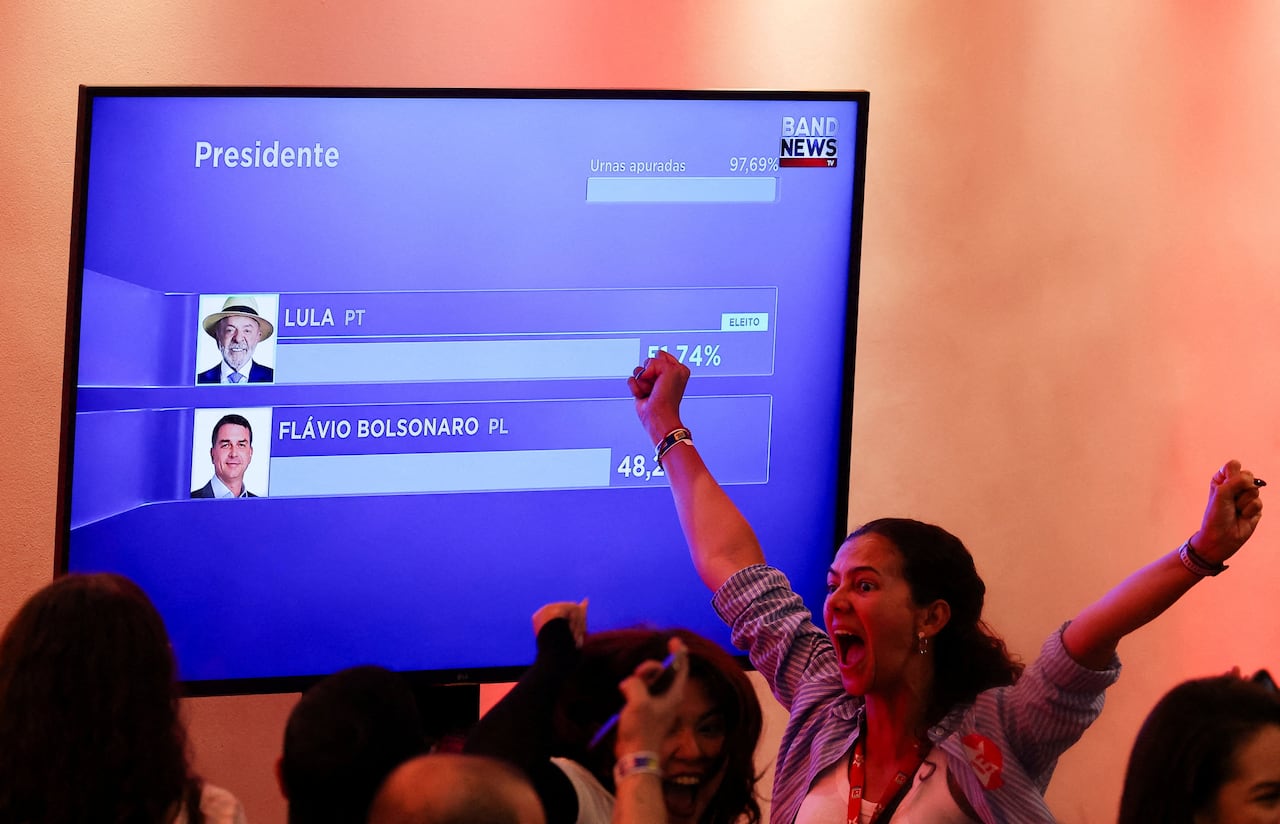
Luiz Inácio Lula da Silva won Brazil’s 2026 presidential runoff, securing more than 51 percent of the vote against right-wing Senator Flávio Bolsonaro, who received 48 percent. The victory gives Lula an unprecedented fourth, non-consecutive presidential term and marks a striking reversal after Bolsonaro led him in the October 4 first round. Lula’s campaign spent the intervening weeks seeking to mobilize voters who had abstained and appealing to people concerned about living costs and social programmes. Higher turnout may have helped him, though the final figures were not yet available. Lula’s support was especially strong in the northeast, while Bolsonaro had larger bases in the south, southeast and centre-west.
The result was contested amid confusion over a last-minute extension of voting hours. Both campaigns had sought extra time for different reasons, and Supreme Court Justice Cristiano Zanin ordered polling places that were still open to remain open for two additional hours. Some stations had already closed, however, and voters were uncertain about where they could still cast ballots. Bolsonaro said the extension and related problems justified annulling the election and accused Zanin of misconduct. Brazil’s Federal Police are investigating alleged disruptions to public transport in five states; in Salvador, a court ordered the arrest of the transport secretary over alleged cuts to bus services. Bolsonaro is expected to challenge the result, while figures including Donald Trump Jr have criticized the extension. The dispute could deepen existing tensions between Brazil’s right wing and its judiciary, which analysts say will require political negotiation.
Lula’s win also complicates Donald Trump’s efforts to expand US influence in Latin America, where right-wing candidates have recently made electoral gains and the Bolsonaro family has enjoyed Trump’s support. The article presents the outcome as both a historic political comeback and a closely contested result whose legal and political consequences remain unsettled.
Entities: Luiz Inácio Lula da Silva, Flávio Bolsonaro, Jair Bolsonaro, Donald Trump, Donald Trump Jr • Tone: analytical • Sentiment: neutral • Intent: inform
26-10-2026
The report says Brazilian President Luiz Inacio Lula da Silva won an unprecedented fourth term, receiving more than 51% of the vote. After the result, Lula thanked Brazil’s youth, whom the report credits with helping him defeat right-wing Senator Flavio Bolsonaro. The article presents the youth vote as a significant factor in Lula’s victory, but offers no further detail about turnout, campaign issues, or how young voters contributed.
Flavio Bolsonaro, identified as the defeated candidate, said he would not concede defeat and would seek to annul the election result. The report does not provide his reasons, describe any legal steps already taken, or indicate what authorities might do in response. It therefore leaves the dispute over the result unresolved.
Overall, this is a brief election news item focused on two immediate developments: Lula’s reported historic win and his acknowledgment of young voters, followed by Bolsonaro’s refusal to concede and stated intention to challenge the result. The supplied article contains no additional background on the candidates, the election process, or the broader political implications. Its framing is primarily factual and concise, rather than analytical or persuasive.
Entities: Luiz Inacio Lula da Silva, Flavio Bolsonaro, Brazil, Brazilian presidential election, Brazilian youth • Tone: neutral • Sentiment: neutral • Intent: inform
26-10-2026
The article reports that videos recorded by close supporters of the candidates captured a pivotal moment in Brazil’s presidential runoff: the point when election results began shifting in favor of incumbent President Luiz Inacio Lula da Silva. As Lula’s prospects improved, he celebrated, while the mood among supporters of his rival, Flavio Bolsonaro, became more subdued. The piece presents the change in the result through scenes recorded by people close to both candidates, emphasizing the contrasting reactions as the race turned.
The supplied article text does not provide vote totals, the scale or timing of the shift, the candidates’ statements, or further details about the videos. It also does not explain the broader political context or describe how the final result was determined. Its focus is therefore narrow: it highlights the visual contrast between Lula’s celebration and the souring mood around Bolsonaro as the result began to favor Lula. The report is framed as a brief social-video item from Al Jazeera’s Newsfeed, published on 26 October 2026.
Entities: Brazil, Luiz Inacio Lula da Silva, Flavio Bolsonaro, Al Jazeera, Brazilian presidential runoff • Tone: neutral • Sentiment: neutral • Intent: inform
26-10-2026
The article reports international reactions to Luiz Inacio Lula da Silva’s victory in Brazil’s presidential run-off on October 25, 2026. Lula secured a fourth, nonconsecutive term, defeating right-wing Senator Flavio Bolsonaro. Bolsonaro called for the vote to be annulled, objecting to a two-hour extension of voting time granted by Supreme Court Justice Cristiano Zanin, although both candidates had requested additional time.
Responses highlighted divisions over the election as well as congratulations and calls for cooperation. Mexican President Claudia Sheinbaum celebrated the result as a victory for democracy and the Brazilian people. Canadian Prime Minister Mark Carney congratulated Lula and emphasized opportunities to deepen Canada-Brazil relations, including trade, environmental protection, and prosperity.
In the United States, Donald Trump Jr criticised the voting extension and argued that mainstream media would react differently if a conservative government had made the decision. By contrast, Senator Bernie Sanders praised Lula’s re-election and his support for workers and democracy. Congressman Ro Khanna described the result as a victory against extremism and urged Donald Trump to respect Brazil’s election. New York City Mayor Zohran Mamdani and California Governor Gavin Newsom’s office also expressed support for democracy and related priorities, including environmental protection and workers’ rights.
Regional leaders offered congratulations and stressed bilateral ties. Cuban President Miguel Diaz-Canel described Lula’s win as historic and associated it with peace, sovereignty, and social justice. Chilean President Jose Antonio Kast said the countries would continue working together on economic integration and organised crime. Peruvian President Keiko Fujimori highlighted cooperation and sustainable development of the shared Amazon, while Bolivian President Rodrigo Paz and Panamanian President Jose Raul Mulino emphasized friendship, stronger relations, and continued cooperation. The article presents a range of international responses, from criticism of the voting process to congratulations and commitments to work with Lula’s government.
Entities: Luiz Inacio Lula da Silva, Flavio Bolsonaro, Brazilian presidential run-off, Brazil, Supreme Court Justice Cristiano Zanin • Tone: neutral • Sentiment: neutral • Intent: inform
26-10-2026
Luiz Inácio Lula da Silva was re-elected president of Brazil, winning 51.8 per cent of the vote and beating Flávio Bolsonaro by nearly 4.4 million votes, according to Brazil’s electoral court. The result came after a chaotic election evening: a Supreme Court justice extended voting by two hours following requests from both candidates, prompting confusion at polling places and delaying the vote tally. Bolsonaro refused to concede, called the extension unprecedented and asked for the results to be annulled, saying they were impossible to accept.
Lula thanked voters, pledged to respect Brazilians regardless of gender or religion, and denounced what he called denialism and lies. He also emphasized national sovereignty, saying Brazil would not accept being another country’s “backyard.” His victory contrasts with a broader Latin American trend of right-wing candidates aligned with U.S. President Donald Trump gaining ground. It leaves Brazil and Mexico, the region’s most populous countries, under left-of-centre leadership and places Brazil’s $2.6-trillion economy at a distance from Washington amid Trump’s increased tariffs.
The article describes celebrations among Lula’s supporters in São Paulo and Rio de Janeiro, alongside criticism from Bolsonaro voters who fear another Lula administration will hurt the economy. Cost of living and public security were major campaign issues. Bolsonaro emphasized crime and food prices, while Lula offered costly incentives to attract undecided voters. Both campaigns faced corruption-related concerns involving allies or family members; Lula’s earlier convictions were annulled after his imprisonment and a finding that the judge was biased.
Lula’s political history stretches back to his work as a union leader in the 1970s and his role in founding the Workers’ Party. After two earlier presidential terms, he was jailed in 2018, released after 580 days and later returned to the presidency by narrowly defeating Jair Bolsonaro in 2022. The article presents this election as likely the final victory of Lula’s political career.
Entities: Luiz Inácio Lula da Silva, Flávio Bolsonaro, Jair Bolsonaro, Donald Trump, Brazil • Tone: analytical • Sentiment: neutral • Intent: inform
26-10-2026
Brazilian electoral authorities declared Luiz Inácio Lula da Silva the winner of the 2026 presidential runoff, giving him 51.8% of the vote and a lead of nearly 4.4 million over Flávio Bolsonaro. The result is expected to give Lula a non-consecutive fourth presidential term, beginning January 5, 2027. Bolsonaro refused to concede and sought annulment of the results, pointing to confusion after a Supreme Court justice extended voting by two hours. The extension followed requests from both campaigns, citing transportation problems in some cities and heavy rain in the south; it delayed vote counting, and the article says it was unclear how many polling stations remained open past the scheduled closing time.
Lula’s win contrasts with a regional trend of right-of-center candidates allied with President Trump gaining ground. It keeps Brazil, Latin America’s largest economy, under a left-of-center government and is likely to maintain distance from U.S. demands, including pressure associated with increased tariffs. Lula celebrated with supporters and pledged to respect Brazilians regardless of gender or religion, while criticizing Bolsonaro and asserting Brazil’s sovereignty. Bolsonaro supporters, meanwhile, raised concerns about crime and the cost of living, and one supporter said another Lula government would harm the economy.
The article traces Lula’s political career, including his presidencies in 2003–2010, imprisonment on corruption convictions later annulled by the Supreme Court, and narrow 2022 victory over Jair Bolsonaro. It describes his campaign’s efforts to reach young voters and mobilize support for democratic values. Both candidates faced corruption-related scrutiny: Flávio Bolsonaro was under investigation over alleged corruption, money laundering, and tax evasion connected to money he said he received from former banker Daniel Vorcaro. The article also notes Jair Bolsonaro’s house arrest for attempting a coup and Flávio’s promise to seek amnesty for his father. It presents the runoff as a consequential contest shaped by sovereignty, democratic concerns, economic pressures, security, and allegations of wrongdoing.
Entities: Luiz Inácio Lula da Silva, Flávio Bolsonaro, Jair Bolsonaro, Brazil, Brazilian electoral court • Tone: analytical • Sentiment: neutral • Intent: inform
26-10-2026
Luiz Inácio Lula da Silva won Brazil’s presidential runoff with 51.8% of valid votes, defeating Senator Flávio Bolsonaro, who received 48.2%. The result gives Lula an unprecedented fourth presidential term and marks the first time since Brazil restored direct elections in 1989 that a candidate has won the runoff after losing the first round. Bolsonaro reportedly refused to concede and said he would seek to annul the result. He also criticized a Supreme Court justice’s decision to extend voting by two hours. The extension followed allegations of voter suppression, including claims from Lula’s campaign that public transportation was suspended in some areas; Bolsonaro’s campaign also sought more voting time, citing rain-related polling disruptions in the south.
Lula’s victory is seen as blocking a rightward political shift in Latin America that U.S. President Donald Trump had supported. Lula, who has publicly sparred with Trump, is scheduled to govern from 2027 to 2030. He will face a Congress in which Bolsonaro’s Liberal Party has a large presence, as well as the challenge of stabilizing Brazil’s substantial public debt. Gross debt reached 82.9% of GDP in August, the highest level since March 2021, amid high interest rates and rigid spending obligations.
Financial markets reacted sharply: the iShares MSCI Brazil ETF fell nearly 20% in overnight trading, with investors preparing for volatility. Bolsonaro had been viewed by some investors as more likely to pursue fiscal austerity and deregulation. Analysts said Lula will need to reassure markets about Brazil’s debt trajectory. They expect his administration may continue a gradual fiscal approach, preserve investment and social spending, and pursue modest spending controls and tax increases, while major structural reforms appear unlikely. Regional leaders congratulated Lula. The article also notes that Serbia’s Aleksandar Vucic conceded defeat in a parliamentary election on the same day.
Entities: Luiz Inácio Lula da Silva, Flávio Bolsonaro, Brazil, Superior Electoral Court, Cristiano Zanin • Tone: analytical • Sentiment: neutral • Intent: inform
26-10-2026
Luiz Inácio Lula da Silva won re-election as Brazil’s president, defeating Flávio Bolsonaro by nearly 4.4 million votes and receiving 51.8% of the vote. The victory gives Lula an unprecedented fourth term and marks a comeback after he lost the first round. His result defied expectations and a broader rightward shift in South America, where several countries have elected right-of-center leaders aligned with US President Donald Trump. The article says Lula’s win is also likely to keep Brazil resisting Trump’s demands amid increased tariffs and other commercial and diplomatic pressure.
Flávio Bolsonaro rejected the result and said he would seek to annul the election. He called the decision to extend voting by two hours “unacceptable” and a “dirty trick,” although both candidates had sought extensions in some areas: Lula cited reports that buses had been removed from circulation, while Bolsonaro pointed to heavy rain. The extension followed disruption at some polling places. Flávio is the son of former president Jair Bolsonaro, who is serving a 27-year prison sentence for attempting a coup after losing to Lula in 2022.
After Lula’s first-round defeat, left-wing supporters mounted large rallies and changed their social-media strategy. The second-round abstention rate fell from 21% to 19%. Lula attributed turnout to efforts to persuade voters that participation was important for democracy. His supporters celebrated in Rio de Janeiro and São Paulo, while his campaign emphasized national sovereignty and opposition to Brazil becoming another country’s “backyard.”
The result leaves Lula with a sharply divided electorate: nearly half the country voted against him, amid concerns about living costs and crime. His previous term saw lower inflation and unemployment and reduced hunger, but those gains did not erase voter dissatisfaction. Lula, already among the world’s oldest leaders, will be 85 by the end of his term in 2030.
Entities: Luiz Inácio Lula da Silva, Flávio Bolsonaro, Jair Bolsonaro, Brazil, Brasília • Tone: analytical • Sentiment: neutral • Intent: inform
26-10-2026
The article reports that incumbent Brazilian President Luiz Inácio Lula da Silva narrowly defeated conservative Senator Flavio Bolsonaro in the second-round presidential runoff, giving Lula an unprecedented fourth presidential term and a notable political comeback. The result followed a first round in which Bolsonaro narrowly led Lula, but neither candidate won the majority needed to avoid a runoff. The article says that voting was extended nationwide by two hours after a Supreme Court justice issued a last-minute order. Lula had argued that buses were not transporting voters as expected; the Bolsonaro camp was likely to argue that the extension benefited Lula. The decision could face legal scrutiny, and the article notes that Bolsonaro’s campaign had also sought extensions in areas affected by heavy rain.
The article describes a geographically divided result. Bolsonaro won several southern states, including Rio de Janeiro, São Paulo, Paraná, and Rio Grande do Sul, but by smaller margins than in the first round. Those gains were not enough to overcome Lula’s strength in the populous northeastern region, which the article calls the Workers’ Party’s “firewall.” Bolsonaro also underperformed in Minas Gerais, a state often viewed as a national bellwether: after winning it by five percentage points in the first round, he was essentially tied there in the runoff. Endorsements from several political figures did not overcome the Workers’ Party’s electoral organization.
The piece also frames the election as a test for Latin America’s conservative movement. It notes that Brazil had recently elected a conservative Congress aligned with Bolsonaro, and that Bolsonaro had presented Lula’s economic approach as tax-heavy and responsible for debt and inflation. The article says Lula has appeared on the presidential ballot seven times and won four elections. The supplied text ends mid-sentence, so it does not include the article’s full conclusion.
Entities: Luiz Inácio Lula da Silva, Flavio Bolsonaro, Brazil, Workers’ Party (PT), Liberal Party (PL) • Tone: analytical • Sentiment: neutral • Intent: inform
26-10-2026
Brazilian President Luiz Inacio Lula da Silva won a fourth term after defeating Senator Flavio Bolsonaro in a close runoff, receiving 51.7% of the vote to Bolsonaro’s 48.2%, according to official results. The result defied polling expectations and marked an unusual reversal: Lula became the first candidate since Brazil’s return to democracy to win after finishing second in the first round. Flavio Bolsonaro, son of former president Jair Bolsonaro, rejected the outcome and said he would seek to annul the election, citing what he called an unacceptable extension of voting hours. The extension followed complaints that transport disruptions had prevented some voters from reaching polling places; heavy rain also affected some regions. Lula said voters had turned out because they understood voting was important to democracy. His supporters celebrated in Rio de Janeiro and São Paulo.
Lula’s victory followed a campaign in which he emphasized past reductions in poverty and inequality, falling unemployment, illiteracy and deforestation, and proposed further worker and welfare measures. His path to re-election appeared uncertain amid economic concerns, corruption scandals and perceptions that he was out of touch with younger and informal workers. Analysts attributed his win partly to stronger-than-expected turnout and voters’ preference for a familiar political direction over change. The result also limits US President Donald Trump’s prospects of expanding a bloc of right-wing Latin American governments aligned with Washington.
The article warns that Lula’s next term will face major political and economic constraints. A notably conservative Congress, with Bolsonaro-aligned parties holding substantial power, could obstruct his agenda and increase pressure for spending cuts and structural reforms. Economic challenges include modest projected growth, high interest rates, rising public debt and household debt. Lula has also called for regulation of social media companies after his campaign accused Meta platforms of favoring Bolsonaro, an allegation Meta denied while acknowledging technical errors affecting some Lula campaign ads. Regional leaders across the political spectrum congratulated Lula, while Mexico’s Claudia Sheinbaum celebrated the result as a democratic victory.
Entities: Luiz Inacio Lula da Silva, Flavio Bolsonaro, Jair Bolsonaro, Brazilian presidential runoff election, Brazilian Supreme Court • Tone: analytical • Sentiment: neutral • Intent: analyze
26-10-2026
Brazilian President Luiz Inacio Lula da Silva won re-election in the October 25, 2026 presidential runoff, defeating right-wing Senator Flavio Bolsonaro with 51.7% of the vote to Bolsonaro’s 48.2%. The result is described as a historic comeback: since Brazil returned to democracy, no candidate who finished behind in the first round had gone on to win the runoff. In the October 4 first round, Bolsonaro had received 47% against Lula’s 45%, leaving the incumbent as the underdog heading into the final contest.
The article portrays the three-week runoff campaign as combative and politically charged. Lula’s left-wing supporters mobilised in the streets and on social media, including through a WhatsApp channel called “Lula’s Army,” which had attracted 8.5 million subscribers. Lula, a former labour leader and veteran pro-union president, framed the contest as his final political battle and secured a fourth, non-consecutive term. A photograph caption describes him celebrating in São Paulo with his wife, Rosangela “Janja” da Silva, and Vice President Geraldo Alckmin.
The headline also reports that Flavio Bolsonaro did not recognize the election results. However, the supplied article text does not elaborate on his response or provide supporting statements. The page includes a notice that the live coverage has ended, as well as a later “Page not found” message, which appears to be website clutter rather than part of the report.
Entities: Luiz Inacio Lula da Silva, Flavio Bolsonaro, Rosangela “Janja” da Silva, Geraldo Alckmin, Brazil • Tone: analytical • Sentiment: neutral • Intent: inform
26-10-2026
The article outlines four major challenges facing Luiz Inácio Lula da Silva after he wins an unprecedented fourth term as Brazil’s president. His narrow runoff victory over right-wing challenger Flavio Bolsonaro—51.7 percent to 48.2 percent—underscores Brazil’s deep political division and the continued strength of Bolsonarism, despite Jair Bolsonaro’s prison sentence for attempting a coup.
First, Lula will face a difficult governing environment. His allies lack a majority in Congress, and recent legislative elections strengthened the right. The Liberal Party is the largest force in both chambers. Lula will need to negotiate with the centrist and center-right Centrao bloc, but lawmakers’ growing influence over the federal budget gives them more independence and makes bargaining harder.
Second, Brazil’s public finances are under pressure. The government spends more than it collects, public debt is above 80 percent of GDP, and high interest rates are being used to contain inflation. Economist Mauro Rochlin warns that the situation could quickly become a crisis. Fiscal adjustment may be unavoidable, but it would require unpopular measures and confront powerful congressional interests. It could also conflict with Lula’s welfare programs, which have reduced poverty and were expanded during the campaign.
Third, public concern about violence will pressure Lula to demonstrate progress against criminal groups and militias that control territory in some cities. During the campaign, he supported lowering the age of criminal responsibility from 18 to 16 for heinous crimes, while the right advocated a reduction to 14.
Finally, Lula must manage relations with the United States under Donald Trump. After the US imposed tariffs on Brazil, Lula pledged to defend national sovereignty while maintaining an anti-imperialist stance. The article notes that ideological tensions do not necessarily determine practical relations, citing the continued substance of Brazil-Argentina ties despite Javier Milei’s insults toward Lula.
Entities: Luiz Inácio Lula da Silva, Flavio Bolsonaro, Jair Bolsonaro, Donald Trump, Brazil • Tone: analytical • Sentiment: neutral • Intent: analyze
26-10-2026
Brazilian President Luiz Inácio Lula da Silva won a fourth, nonconsecutive presidential term, defeating Sen. Flávio Bolsonaro in a closely contested runoff. With more than 96% of votes counted, Lula received more than 51% and Bolsonaro more than 48%. The outcome is historically significant: since Brazil restored democracy in 1989, no candidate who lost the first round had gone on to win the presidency in the runoff. Lula, who was about to turn 81, described the result as a defeat for “denialism” and lies, thanked young people and older voters, and said Brazil would not be “anyone’s backyard,” a pointed response to President Trump. His win also ran counter to a recent rightward shift in Latin American politics.
Election day was disrupted by calls from both campaigns to extend voting hours, citing reduced bus service and heavy rain. Supreme Court Justice Cristiano Zanin ordered a two-hour extension, although some polling stations could not restart their electronic voting machines. Bolsonaro called the result “inexplicable” and said he would seek to annul the vote. He had campaigned for closer ties with Trump and pledged to pardon his father, former President Jair Bolsonaro, who is serving a 27-year sentence under house arrest for plotting to overturn his 2022 election loss.
Lula’s campaign emphasized continuity and social spending, while the contest intensified after Bolsonaro’s strong first-round showing. Lula’s political history includes leading metalworkers’ strikes against Brazil’s dictatorship, helping build the Workers’ Party, and serving two terms from 2003 to 2010, when the economy boomed and millions escaped poverty. Later corruption scandals damaged his party; Lula was jailed, but his convictions were overturned on procedural grounds. His foreign policy has promoted the Global South and BRICS while seeking relations with major powers, though his ties with China and Russia have sometimes caused friction with Washington.
Despite his victory, Lula faces a sharply divided country, slower economic growth than during his first terms, and concerns about crime and public security. His campaign proposed banning sports betting, renegotiating debt and increasing penalties for minors who commit crimes. Political scientist Jairo Nicolau said voters’ political identities had become more important than their views on policy options.
Entities: Luiz Inácio Lula da Silva, Flávio Bolsonaro, Jair Bolsonaro, Brazil, São Paulo • Tone: analytical • Sentiment: neutral • Intent: inform
26-10-2026
Brazilian President Luiz Inácio Lula da Silva was reelected, defeating far-right challenger Flavio Bolsonaro with 51.78% of the vote, according to the article. The result gives Lula a non-consecutive fourth presidential term, pending confirmation by electoral authorities. Voting hours were extended by two hours because of bad weather and poor transportation, a decision that could prompt legal action from Bolsonaro, who had narrowly led Lula in the first round.
Lula celebrated with supporters, allies, and First Lady Rosângela da Silva in São Paulo. In his victory speech, he thanked Brazilians, including young people he said had taken to the streets to defend democracy. The article places the result in the context of Lula’s frequent clashes with U.S. President Donald Trump. It says Trump used tariffs on Brazilian imports and sanctions in an effort to keep former president Jair Bolsonaro out of prison after his attempted coup four years earlier. Flavio Bolsonaro had campaigned on the promise of closer relations with Trump.
Lula’s new term is due to begin January 5, 2027, and is expected to be his last. The article recounts his political career: he began as a union leader in the 1970s, helped found the Workers’ Party, won the presidency in 2002, and was reelected in 2006. After Dilma Rousseff succeeded him and later was impeached, Lula was jailed for 580 days during a corruption probe and could not run in 2018. Brazil’s Supreme Court later annulled his sentence after messages indicated that the judge who convicted him was biased. Lula returned to office by narrowly defeating Jair Bolsonaro in 2022. After falling behind in this election’s first round, he refocused his campaign on younger voters, his political legacy, Brazilian sovereignty, and concerns about a Bolsonaro presidency and U.S. influence.
Entities: Luiz Inácio Lula da Silva, Flavio Bolsonaro, Jair Bolsonaro, Donald Trump, Rosângela da Silva • Tone: analytical • Sentiment: neutral • Intent: inform
26-10-2026
World leaders congratulated Brazilian President Luiz Inacio Lula da Silva after he defeated right-wing Senator Flavio Bolsonaro in the presidential runoff, securing a fourth, non-consecutive term. The article presents reactions from leaders in Canada, Peru, Ecuador, Chile, Mexico, Paraguay, Uruguay, Bolivia, Cuba and Panama. Their statements welcomed Lula’s victory and praised Brazil’s democratic process, while also pointing to shared interests and opportunities for cooperation. Canadian Prime Minister Mark Carney said the countries could expand trade, protect the environment and promote prosperity. Chilean President Jose Antonio Kast highlighted economic integration and the fight against organized crime. Leaders from Paraguay and Bolivia emphasized regional integration, development and closer relations, while Ecuador’s Daniel Noboa referred to shared regional challenges. Mexican President Claudia Sheinbaum celebrated the democratic result, and several other leaders described the vote as a democratic day or celebration. Cuban President Miguel Diaz-Canel framed Lula’s victory as ensuring continuity for Brazil’s path of peace, sovereignty and social justice. The article is structured as a collection of leaders’ comments rather than an analysis of the election or its implications. Overall, the responses combine congratulations with calls to continue or deepen cooperation between Brazil and neighboring countries and international partners.
Entities: Luiz Inacio Lula da Silva, Flavio Bolsonaro, Brazil, Sao Paulo, Workers' Party (PT) • Tone: neutral • Sentiment: positive • Intent: inform
26-10-2026
Luiz Inacio Lula da Silva won an unprecedented fourth Brazilian presidential term on Oct. 25, defeating Flavio Bolsonaro in a run-off despite finishing second in the first round. The victory keeps Brazil, Latin America’s largest country, under left-wing leadership amid a regional shift to the right. At nearly 81, Lula sought to counter doubts about his fitness by exercising during the campaign and, after his initially disappointing first-round result, adopted more social-media-focused tactics.
The article traces Lula’s rise from poverty in Pernambuco. He worked as a shoeshine boy and peanut seller before becoming a metalworker and union leader, losing a finger in a workplace accident. After three failed presidential bids, he took office in 2003 and was re-elected in 2006. His first two terms coincided with an economic boom that helped lift 30 million people out of poverty.
Corruption scandals involving Lula and his party later damaged his reputation and helped propel Jair Bolsonaro to the presidency in 2018. Lula was jailed before that election, but the charges were annulled on procedural grounds after the lead judge was found biased; he was not exonerated, and the affair contributed to lasting political polarisation. He made a narrow comeback in 2022.
In his third term, Lula restored social programmes, worked to curb Amazon destruction and strengthened democratic institutions, supporters say. His Bolsa Familia welfare programme remains a defining achievement, though he resists being remembered only for it. Critics point to crime, corruption and rising public debt, including the substantial monthly interest burden. The article also notes that Lula has no cultivated successor. Supporters nevertheless see him as a defender of democracy and a champion of poorer Brazilians.
Entities: Luiz Inacio Lula da Silva, Flavio Bolsonaro, Jair Bolsonaro, Brazil, Pernambuco • Tone: analytical • Sentiment: neutral • Intent: inform
26-10-2026
Thousands of supporters celebrated Luiz Inacio Lula da Silva’s victory in Brazil’s presidential election by marching along Sao Paulo’s Paulista Avenue. Lula received 51.8% of the vote, defeating Flavio Bolsonaro, son of former president Jair Bolsonaro, who received 48.2% and refused to acknowledge the result. Lula joined the celebrations, addressing the crowd from his car and telling supporters that he loved them and that the fight would continue.
The article conveys the joy and relief of Lula’s supporters, many of whom viewed the result as a defence of democracy, freedom and minority rights. Anna Zanatta, 43, said the victory represented Brazil’s freedom, democracy and history. She recalled being born during the military dictatorship that ruled from 1964 to 1985 and said she had promised her granddaughter that Brazilians would not experience such a period again. Other supporters, including doorman Alfonso dos Reis, expressed hope that Lula’s return would help build a better country.
Some celebrants connected the result to concerns about Jair Bolsonaro’s political future. Theatre actor Mateus Freitas shouted “No amnesty!”, referring to efforts to free the former president, who is serving a 27-year sentence for attempting a coup after losing the 2022 election. Flavio Bolsonaro had promised to release his father if elected. Freitas described the result as a victory for minorities and workers, and a rejection of a government he feared would be fascist and discriminatory.
The outcome also brought relief to voters who had worried about a possible far-right turn. Flavio Bolsonaro had led in the first round, and polls had given him a slight advantage before the run-off. Architect Felipe Rodrigues said he was glad Brazil had instead chosen a president who continued trying to improve the lives of the poor. Lula credited young people who mobilized to defend democracy, while supporters also pointed to lawmaker Andre Janones’s large WhatsApp campaign channel as part of Lula’s comeback.
Entities: Luiz Inacio Lula da Silva, Flavio Bolsonaro, Jair Bolsonaro, Sao Paulo, Paulista Avenue • Tone: emotional • Sentiment: positive • Intent: inform
26-10-2026
Luiz Inacio Lula da Silva won an unprecedented fourth term as Brazil’s president, defeating Senator Flavio Bolsonaro by more than four million votes in an Oct. 25 runoff. The result defied polling and reversed expectations of a further rightward shift in Latin America. Bolsonaro, who had led the first round, said he would seek to annul the result, citing an extension of voting hours. Analysts considered reversal unlikely, although right-wing protests were possible. His challenge recalled his father Jair Bolsonaro’s refusal to accept his 2022 defeat; Jair Bolsonaro was later sentenced to 27 years for plotting a coup to remain in power.
Lula’s victory adds another comeback to a political career spanning half a century. His campaign emphasized reducing poverty and inequality, expanding welfare and protecting social gains and national sovereignty. Late promises included free weekend public transport and an increase to his welfare programme. His earlier record, including lower poverty and inequality, helped counter voter concerns about corruption scandals, rising prices and his perceived distance from Brazil’s growing informal workforce. The result also disappointed US President Donald Trump, whose administration had supported the Bolsonaros’ return to power.
Despite the win, Lula faces a difficult term. Brazil has elected its most conservative Congress since the return to democracy in the 1980s, and Bolsonaro’s Liberal Party and allies may hold majorities in both chambers. This could constrain Lula’s influence over legislation, budgets and appointments, while increasing the possibility of political conflict. Economic pressures include forecast growth of only 2.3% in 2027, high interest rates, public debt exceeding 82% of GDP and rising household debt. Lula has introduced debt relief measures and a provisional ban on online betting, but experts expect limited progress in controlling spending. A Congress seeking business-oriented structural reforms could push for spending cuts and provoke public backlash.
Entities: Luiz Inacio Lula da Silva, Flavio Bolsonaro, Jair Bolsonaro, Brazil, Sao Paulo • Tone: analytical • Sentiment: neutral • Intent: inform
26-10-2026
The article reports that Brazilian President Luiz Inácio Lula da Silva has won the 2026 presidential runoff against Flávio Bolsonaro, reversing a first-round defeat. With 88.7% of districts counted, Lula is shown with 51.52% of the vote, or 56,506,197 votes, while Bolsonaro has 48.48%, or 53,164,037 votes. The results are attributed to Brazil’s electoral authority, the TSE.
The article explains that Brazil elects its president by popular vote, with a candidate needing more than half of votes cast to win outright. Since no candidate reached that threshold on 4 October, the two leading candidates proceeded to a second round. Lula is described as the incumbent leftwing president; Bolsonaro, a lawyer and former senator from Rio, is the son of far-right former president Jair Bolsonaro. The elder Bolsonaro is serving a 27-year prison sentence for plotting a failed coup after losing to Lula in 2022, and has endorsed his son.
The account compares the contest with the 2022 election, when Lula defeated Jair Bolsonaro in the runoff. It notes that Lula then led after the first round and won Minas Gerais, whereas in 2026 Flávio Bolsonaro led Lula in that state in the first round, 48.43% to 43.33%. The article highlights the historical significance of the reported result: since Brazil’s return to democracy in 1985, no first-round runner-up had previously come back to win the second round. Lula’s campaign had been encouraged by large, student-led anti-Bolsonaro protests following the first round. The article also gives biographical context, noting that Lula served two terms from 2003 to 2010, returned to office in 2023, and is approaching his 81st birthday; Bolsonaro is 45.
Entities: Luiz Inácio Lula da Silva (Lula), Flávio Bolsonaro, Jair Bolsonaro, Brazil, Minas Gerais • Tone: analytical • Sentiment: neutral • Intent: inform
26-10-2026
Brazilian leftist president Luiz Inácio Lula da Silva defeated far-right senator Flávio Bolsonaro in the presidential runoff, winning a fourth, non-consecutive term. The final tally gave Lula 51.79% of the vote, or 64,256,232 votes, against Bolsonaro’s 48.21%, or 59,826,041. Lula supporters celebrated in cities including São Paulo and Rio de Janeiro, where crowds described the result as a historic victory and a rejection of dictatorship and the far right.
Flávio Bolsonaro said it was “impossible to concede” the result and announced that his legal team would seek to have the election annulled. He objected to a supreme court justice’s decision to extend voting hours, calling it a change to the rules during the election. The update notes that Bolsonaro had also requested an extension, and that the decision followed a delay by another justice in ruling on Lula’s campaign request. It also recalls that Flávio’s father, former president Jair Bolsonaro, refused to acknowledge his defeat four years earlier and was later convicted for an attempted coup.
Lula’s win is expected to unsettle financial markets. Investors had positioned for a rightward change after Flávio Bolsonaro led the first round, and analysts anticipated a sharp selloff and repricing after Lula’s victory. Over the coming four years, Lula will face the challenge of containing Brazil’s debt growth while protecting social programs and investment. Health minister Alexandre Padilha praised the result as a victory for Brazil’s people, public health, education, the environment and the constitution, and as a signal to Latin America and the world. The live report also describes jubilant crowds on São Paulo’s Paulista Avenue, while noting the relief and excitement among Lula supporters.
Entities: Luiz Inácio Lula da Silva, Flávio Bolsonaro, Jair Bolsonaro, Alexandre Padilha, Cristiano Zanin • Tone: analytical • Sentiment: neutral • Intent: inform
26-10-2026
Luiz Inácio Lula da Silva has won a historic fourth term as Brazil’s president, defeating far-right senator Flávio Bolsonaro in a dramatic runoff comeback. With all votes counted, Lula received 51.79% to Bolsonaro’s 48.21%, a margin of 4.4 million votes. Lula had narrowly lost the first round, and no first-round runner-up had previously gone on to win a runoff since Brazil’s return to democracy in the 1980s. His campaign benefited in part from increased turnout: abstention fell from 21.08% in the first round to 19.21% in the runoff.
Entities: Luiz Inácio Lula da Silva, Flávio Bolsonaro, Jair Bolsonaro, Brazil, São Paulo • Tone: analytical • Sentiment: positive • Intent: inform
26-10-2026
Luiz Inacio Lula da Silva won a fourth presidential term in Brazil, defeating Senator Flavio Bolsonaro by more than four million votes in a runoff on Sunday, October 26, 2026. The result was described as a surprise that defied polling and a broader trend of anti-incumbent and right-wing victories in Latin America. Lula, 80, had finished second in the first round, making him the first candidate since Brazil returned to democracy in the 1980s to win after that initial result.
Flavio Bolsonaro, the eldest son of former president Jair Bolsonaro, refused to concede. He said he would seek annulment of the result, citing a Supreme Court ruling that extended voting by two hours. His challenge echoed his father's refusal to accept defeat in 2022. Jair Bolsonaro was later sentenced to 27 years for plotting a coup to remain in power. Analysts cited the scale of Flavio Bolsonaro's loss—more than twice his father's losing margin—and his campaign's own request for an extension because of rain in the south as reasons an annulment was unlikely.
Lula's win marks another comeback in a long political career. He served as president from 2003 to 2011 and was jailed from 2018 to 2019 after a corruption conviction that was later overturned, enabling him to contest and win the 2022 election against Jair Bolsonaro.
His campaign combined pragmatism and populism, emphasizing reforms intended to benefit workers and poorer Brazilians. Late-campaign promises included free nationwide weekend public transport, which would need formal submission to Congress, and a 15 per cent increase in his established welfare programme, already being implemented. Lula also championed a constitutional amendment that became Brazil's biggest labour reform in decades and passed with broad congressional support.
Entities: Luiz Inacio Lula da Silva, Flavio Bolsonaro, Jair Bolsonaro, Brazil, Brazilian electoral court • Tone: analytical • Sentiment: neutral • Intent: inform
26-10-2026
Congress MP Shashi Tharoor welcomed Luiz Inácio Lula da Silva’s re-election as Brazil’s president, describing it as an endorsement of social inclusion, economic justice, poverty alleviation and democratic participation. In a post on X, Tharoor portrayed Lula as a champion of working-class and poorer Brazilians and said his return to leadership could renew attention to their concerns. He also argued that Lula’s independent foreign policy would prioritize Brazilian sovereignty, while warning that relations with Washington could face friction. Tharoor cited recent trade and tariff disputes and the United States’ support for Lula’s electoral rival as potential sources of tension. He framed the result as a choice for social progress, democratic resilience and international cooperation amid rising right-wing movements in Latin America.
The article reports that Lula, an 80-year-old former factory worker and leader of the Partido dos Trabalhadores, defeated far-right candidate Flavio Bolsonaro in a closely contested presidential run-off. Neither candidate secured enough support in the first round to avoid a second vote. Lula thanked voters and young people who mobilized in support of democracy, saying the victory belonged to those seeking a more just, sovereign and democratic Brazil. The article, citing Al Jazeera, says the result ends a run of electoral successes by far-right candidates in the region, where crime concerns, anti-incumbency sentiment and promises of closer ties with US President Donald Trump have featured in campaigns.
Voting was extended by two hours by a Supreme Court justice after both campaigns made requests. Lula’s campaign cited concerns that restricted public transport in some cities could impede voting; Bolsonaro’s campaign sought extra time in areas affected by bad weather. Bolsonaro refused to concede and said he would seek to annul the election, alleging irregularities without presenting supporting evidence. After his victory, Lula said Brazil was “no one’s backyard,” rejected foreign intervention through digital platforms and pledged to broaden public participation in government decisions.
Entities: Shashi Tharoor, Luiz Inácio Lula da Silva (Lula), Flavio Bolsonaro, Donald Trump, Brazil • Tone: analytical • Sentiment: positive • Intent: inform